By Philippe Reclus
summary
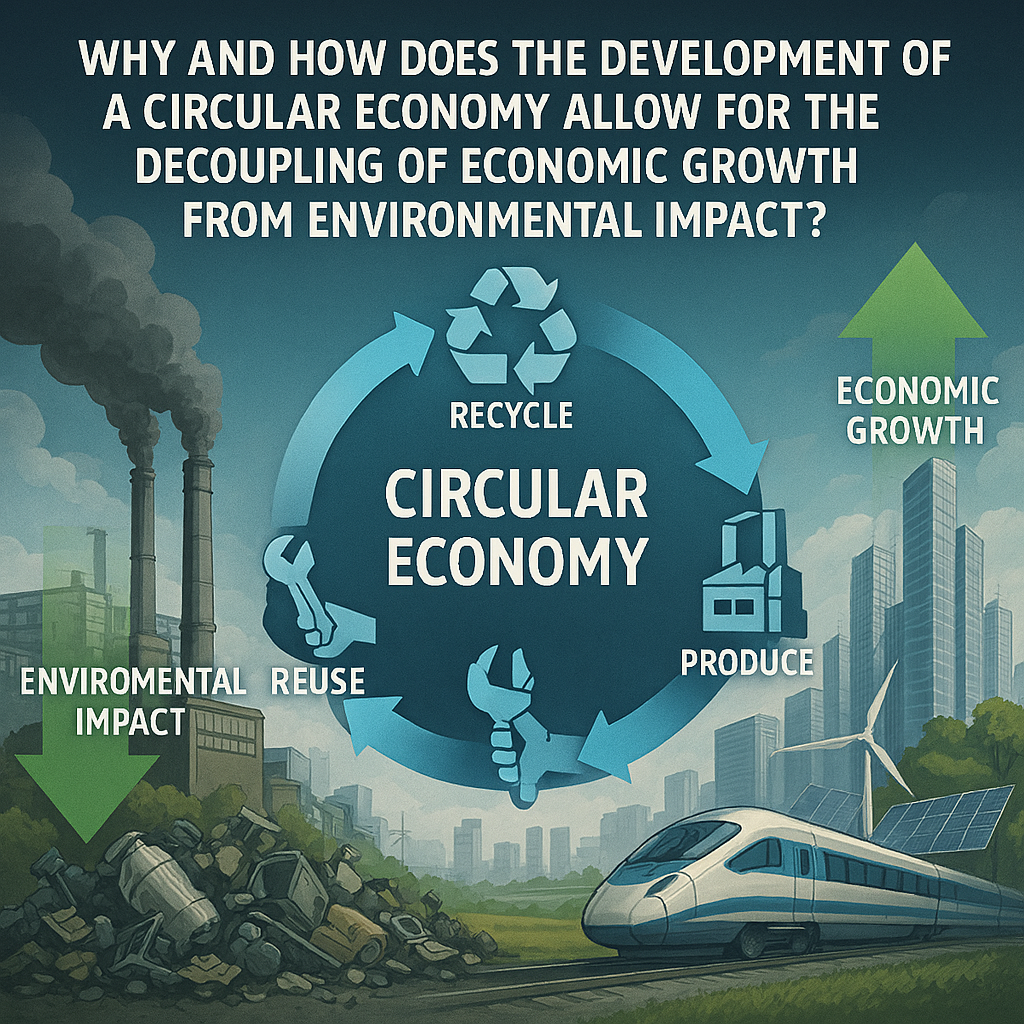
The circular economy is an innovative economic model aimed at decoupling economic growth from environmental degradation by promoting sustainable resource management and waste reduction. In contrast to the traditional linear economy, characterized by a « take-make-dispose » approach, the circular economy encourages practices such as reducing waste, reusing materials, and recycling, thereby fostering a regenerative system that minimizes environmental impact and conserves resources.
This shift is increasingly recognized as essential in addressing global challenges such as climate change, resource depletion, and biodiversity loss, making it a focal point for businesses, policymakers, and environmental advocates worldwide.
The significance of the circular economy lies in its potential to drive sustainable economic growth while ensuring social equity and environmental protection. As illustrated by the Circularity Gap Report, the global economy remains predominantly linear, with only 6.9% of materials being recirculated in 2025, highlighting the urgent need for a transition to circular practices to mitigate the adverse effects of rising consumption.
The circular economy not only offers environmental benefits by reducing waste and emissions but also presents economic advantages through job creation and cost savings associated with resource efficiency and innovative business models.
Prominent controversies surrounding the circular economy include the challenges of implementation, such as regulatory barriers, technological limitations, and consumer behavior, which can impede the adoption of circular practices across various sectors.
Additionally, the transition requires a collective effort from businesses, governments, and communities, necessitating significant changes in consumer attitudes and corporate strategies to overcome entrenched linear practices.
Despite these challenges, the potential benefits of a circular economy make it a critical area of focus for fostering a sustainable future and enhancing resilience against environmental crises.
Historical Context
The concept of the circular economy has emerged as a response to the limitations and negative consequences of the traditional linear economic model, which is characterized by a « take-make-dispose » approach to resource use. This model, which was solidified during the industrial revolution, initially facilitated mass production and economic growth by enabling societies to harness abundant resources effectively. However, over time, the sustainability of this approach has come into question as it has led to significant environmental degradation and resource depletion, exacerbating issues such as climate change and loss of biodiversity. As global consumption continues to rise, so does the pressure on environmental sustainability and social well-being. The Circularity Gap Report 2025 indicates that the global economy is only 6.9% circular, down from 9.1% in 2018, signifying a substantial loss of materials and resources in the current economic framework. This alarming statistic illustrates the urgent need for businesses and governments to rethink traditional economic models to ensure a more sustainable future. The circular economy presents an alternative by advocating for the recirculation of resources within the economy, thereby reducing waste and promoting sustainable production practices. This shift is increasingly recognized as essential for long-term economic growth and environmental protection, particularly in developing countries where traditional linear models are still prevalent. The urgency for transitioning to a circular economy is underscored by the commitment of various countries and organizations to the United Nations Sustainable Development Goals (SDGs), which emphasize responsible production and consumption. Historical shifts in legislation and public awareness have also played a significant role in the evolution of the circular economy. For instance, movements such as the Right to Repair and the introduction of global Ecodesign legislation are pushing for durability, repairability, and sustainable practices in product design. These changes reflect a broader societal recognition that the current economic model is unsustainable and necessitate innovative solutions that incorporate environmental considerations into product development and consumption patterns.
Principles of Circular Economy
The circular economy is based on a transformative model designed to decouple economic growth from environmental degradation. It is characterized by three core principles known as the « 3 Rs »: Reduce, Reuse, and Recycle, which together promote sustainability and resource efficiency across production and consumption processes.
Core Principles
Reduce
The first principle, « Reduce, » emphasizes minimizing waste generation at the outset. This involves adopting design and production strategies that prioritize the lifespan and sustainability of products, effectively preventing waste before it is created. By reducing resource extraction and consumption, businesses can lower their environmental impact and contribute to a more sustainable economic model.
Reuse
The second principle, « Reuse, » focuses on extending the functional lifespan of products and materials. This involves finding innovative ways to utilize items multiple times or in different contexts, thereby keeping them in circulation within the economy for as long as possible. Engaging in reuse not only conserves resources but also fosters a culture of sustainability.
Recycle
Recycling, the third principle, involves breaking down products into their raw materials for the production of new items. Although widely recognized, recycling is often viewed as a last resort after reducing and reusing have been fully implemented. Effective recycling practices can help recover valuable materials and reduce the reliance on virgin resources.
Recover
Additionally, the concept of « Recover » has emerged as a critical fourth aspect of the circular economy, involving reclaiming materials or energy from products that can no longer be reused or recycled. This process includes methods such as composting organic waste and converting non-recyclable materials into energy.
Integration for Sustainable Outcomes
These principles work in concert to foster a sustainable economic model that aims to eliminate waste, keep materials in use, and regenerate natural systems. By integrating the principles of reduce, reuse, recycle, and recover into their operations, companies can significantly decrease waste, lower greenhouse gas emissions, and conserve natural resources. The shift towards a circular economy represents a significant departure from the traditional linear economic model, where products are made, used, and discarded. Instead, businesses are encouraged to design products for longevity and multiple life cycles, creating ongoing relationships with consumers and generating value through sustainable practices. In doing so, the circular economy not only mitigates environmental impacts but also opens new avenues for economic growth and innovation.
Benefits of Circular Economy
The circular economy presents numerous advantages across environmental, economic, and social dimensions. It is recognized for its potential to foster innovation, enhance competitive advantages, and promote a healthier environment while contributing to sustainable economic growth.
Environmental Benefits
A key focus of the circular economy is reducing waste generation and environmental impact. By promoting the principles of reduce, reuse, and recycle, this model significantly decreases the volume of waste, alleviating pressure on landfills and minimizing pollution and greenhouse gas emissions associated with waste disposal. The circular economy also encourages the conservation of natural resources by keeping materials in use for as long as possible, thus mitigating resource depletion and protecting biodiversity.
Reduced Resource Consumption
The first principle of the circular economy, « Reduce, » emphasizes the efficient use of resources to minimize waste creation. This involves designing products that require fewer materials or consume less energy, ultimately resulting in a smaller environmental footprint. Additionally, shifting towards recycled materials lessens the reliance on virgin resources, which reduces fossil fuel consumption and associated emissions, thus contributing to climate change mitigation.
Economic Benefits
The transition to a circular economy offers substantial economic advantages, including cost savings and job creation. Businesses can achieve cost reductions through resource optimization and waste minimization, which lowers expenses related to raw materials and waste disposal. Furthermore, the circular economy model promotes innovation by encouraging businesses to rethink production processes and explore more efficient techniques and environmentally friendly practices. This innovation can lead to increased profitability and a stronger market position.
Job Creation
One of the most significant economic impacts of the circular economy is the potential for job creation. As businesses shift towards circular practices, new roles are emerging in areas such as recycling, repair, and resource management, contributing to economic growth and stability. It is estimated that transitioning to a circular economy could generate up to 6 million new jobs globally by 2030, underscoring the importance of a just transition that considers social equity and skills development.
Social Benefits
Beyond environmental and economic gains, the circular economy fosters social benefits, particularly in community development. Local recycling and refurbishing initiatives often strengthen community ties and promote shared environmental responsibility, while also enhancing local economic development and social cohesion.
Strategies for Implementation
Integrating Circular Economy Principles
To effectively implement circular economy (CE) strategies, businesses must first integrate CE principles into their overall business strategy. This integration allows companies to create and deliver value while simultaneously reducing their environmental and social impact. Key models include Product-as-a-Service, which allows customers to lease products instead of owning them outright, and resource recovery, where discarded materials are transformed into new products.
Assessing and Optimizing Processes
Evaluating existing manufacturing processes is crucial for identifying strategies to minimize material usage and reintroduce waste back into production cycles. This includes investing in new processes or technologies that may require significant initial capital but can lead to long-term savings and increased efficiency. To facilitate this transition, securing grants, subsidies, or financing options aimed at sustainability initiatives can help mitigate upfront costs.
Phased Implementation and Training
Implementing circular practices often necessitates changes in operations, which can be complex. Developing a phased implementation plan alongside comprehensive training for employees can ease the transition and ensure that all stakeholders are on board with the new practices. Such training should emphasize both the environmental and financial benefits of adopting circular strategies, fostering a culture of sustainability within the organization.
Building Collaborations and Utilizing Technology
Strategic collaborations with logistics providers, recyclers, and sustainability experts can accelerate the transition to a circular economy by standardizing processes and enhancing supply chain efficiency. Additionally, leveraging digital tools for tracking and automating service management can streamline operations and improve maintenance prediction, making the transition to circular models more manageable and effective.
Engaging Consumers and Addressing Barriers
Engaging consumers in the transition process is essential. Businesses should aim to foster meaningful dialogues about sustainability, thus building a community of loyal customers who align with the company’s eco-conscious values. However, challenges remain, including a lack of awareness, financial constraints, and insufficient expertise in implementing CE practices. Overcoming these barriers involves transparent communication about operations and actively involving consumers in discussions and workshops focused on CE topics.
Leveraging Legislative Frameworks
Governments play a critical role in supporting the transition to a circular economy. Coherent regulatory frameworks that encourage sustainable practices can significantly influence business decisions. By advocating for stricter legislation and providing incentives, policymakers can help overcome resistance and facilitate the widespread adoption of circular economy strategies.
Challenges and Barriers
The transition to a circular economy (CE) faces numerous challenges and barriers that can impede progress across various sectors. These obstacles can be categorized into regulatory, financial, technological, organizational, and consumer-related issues.
Regulatory Barriers
Regulatory frameworks play a crucial role in facilitating or hindering the adoption of CE practices. Numerous studies have identified gaps within existing legal structures, highlighting regulatory barriers that can obstruct the full lifecycle of products, from extraction and production to waste management and recycling. In the European Union, complex and often misaligned regulations create increased compliance costs and administrative burdens for businesses seeking to adopt circular practices. Additionally, the absence of global agreements on material exchange further complicates operations for firms involved in international supply chains, exacerbating the challenges of effective CE implementation.
Financial Barriers
Financial constraints significantly hinder the shift towards a CE model. Many firms face high initial investment costs associated with restructuring existing facilities and adopting new technologies designed for sustainable practices. Furthermore, uncertainty regarding customer demand for sustainable products adds to the financial risk, as businesses may struggle to recover their investments if consumer interest is insufficient. Market barriers, such as the higher price points of sustainable goods and low returns on investment, pose additional challenges to firms attempting to transition.
Technological Barriers
Technological limitations are a prominent challenge in transitioning to a CE. Many small and medium-sized enterprises (SMEs) lack the necessary expertise and resources to implement innovative technologies that support circular practices. This deficiency is compounded by a general need for products and services designed with circularity in mind from the outset. The lack of access to advanced technological solutions can stifle the capacity for innovation and disrupt the potential for a successful transition to CE.
Organizational Barriers
Organizational inertia can also impede the adoption of CE practices. Resistance to change within companies, coupled with limited skills and capacities to drive innovation, often results in a reluctance to transition from traditional linear models. Firms may struggle with integrating circular strategies into existing processes, and without adequate support and resources, the necessary cultural shifts may not occur. Establishing industrial clusters and promoting collaboration across the value chain can help address these organizational challenges.
Consumer-Related Barriers
Consumer behavior and perceptions are crucial factors influencing the transition to CE. While there is a growing market demand for sustainable products, a significant gap exists between consumer intentions and actual purchasing behaviors, often referred to as the attitude-behavior gap. Factors such as limited awareness of CE principles and traditional preferences for ownership hinder consumer acceptance of reused materials and circular products. To overcome these barriers, awareness campaigns aimed at educating the public about the benefits of CE are essential.
Case Studies
The implementation of circular economy principles across various sectors showcases a transformative approach that decouples economic growth from environmental impact. Numerous case studies demonstrate how businesses, governments, and cities are successfully adopting circular economy models to enhance sustainability while driving economic resilience.
Success Stories
A wide range of case studies highlight successful circular economy initiatives. For example, Apeel and thredUP are leading brands that exemplify how circular practices can be integrated into the fashion industry, focusing on resource optimization and waste reduction. (The Circular Economy | Definition & Model Explained | Ellen MacArthur Foundation)
These case studies provide practical insights into the effective application of circular economy strategies.
Business Models
Research has identified five distinct circular business models that facilitate a transition towards a more resource-efficient economy. (Business Models for the Circular Economy | OECD)
These models illustrate how different industries can adopt circular principles, from recycling and refurbishing to creating new product lines based on recycled materials. The adoption of these models not only conserves resources but also drives innovation within businesses.
Challenges and Solutions
Despite the advantages, challenges in implementing circular economy practices persist. Regulatory barriers, consumer behavior, and logistical issues can hinder progress.
Specific case studies delve into these obstacles and propose actionable solutions, such as smarter collection and sorting systems that utilize AI technology to enhance recycling efficiency.
Addressing these challenges is crucial for businesses and governments aiming to shift towards sustainable practices.
Interdisciplinary Insights
The exploration of circular economy case studies underscores the interdisciplinary nature of this field, as it intersects with business, psychology, and engineering disciplines. By studying the successes and failures across different industries, researchers and practitioners can develop more nuanced strategies for integrating circular economy principles into everyday practices.
Practical Examples
Several notable examples illustrate the circular economy in action. Fashion rental services and electronics refurbishment programs are prime instances of how businesses are extending product lifecycles and reducing waste through innovative practices.
These initiatives not only enhance sustainability but also provide economic opportunities in terms of cost savings and new revenue streams.
Future Perspectives
The transition to a circular economy (CE) presents significant opportunities for businesses and economies to achieve sustainable growth while minimizing environmental impact. Future research and practice should focus on several key areas to fully realize these benefits.
Sustainable Supply Chains
A critical avenue for future research is the development of sustainable supply chains that emphasize process improvements over design innovations. Studies should aim to validate hypotheses regarding the effectiveness of sustainable supply chain management (SSCM) within Malaysia’s EMS-certified manufacturing firms, providing a holistic view of the operational context in which these practices are implemented ( https://pmc.ncbi.nlm.nih.gov/articles/PMC10204036/ ).
Validation of Circular Economy Models
To enrich understanding and facilitate broader adoption of CE practices, future investigations should focus on validating and enriching findings from various firms that have transformed their operations using the CE model across different industries, sizes, and regions, both in developed and developing countries. Longitudinal studies are particularly necessary to track these transitions over time, allowing researchers to assess the long-term effectiveness and challenges of adopting CE principles.
Collaborative Networks
Future efforts should also emphasize the formation of collaborative networks among stakeholders, which are essential for streamlining the CE adoption process. Such networks can enhance knowledge sharing, resource management, and the development of innovative solutions that support circular practices.
Technological Innovations
Technological innovation is vital for scaling circular business models, facilitating features such as modular design, traceability, and predictive maintenance. Future research should explore how these technologies can enhance efficiency, transparency, and behavioral change throughout product lifecycles, ultimately supporting businesses in creating reliable and high-quality products.
Economic and Employment Growth
Transitioning to a circular economy is also linked to broader economic growth and employment opportunities. Future studies should investigate how CE principles can stimulate innovation, increase competitiveness, and create new business opportunities, all while reducing costs and environmental impacts.
Implementation Strategies
Businesses must adopt comprehensive strategies that integrate circular economy principles into their core operations. Future research should provide actionable insights into how firms can design products for longevity, ease of recycling, and waste reduction throughout the product lifecycle, thus facilitating a more effective transition to a circular model.