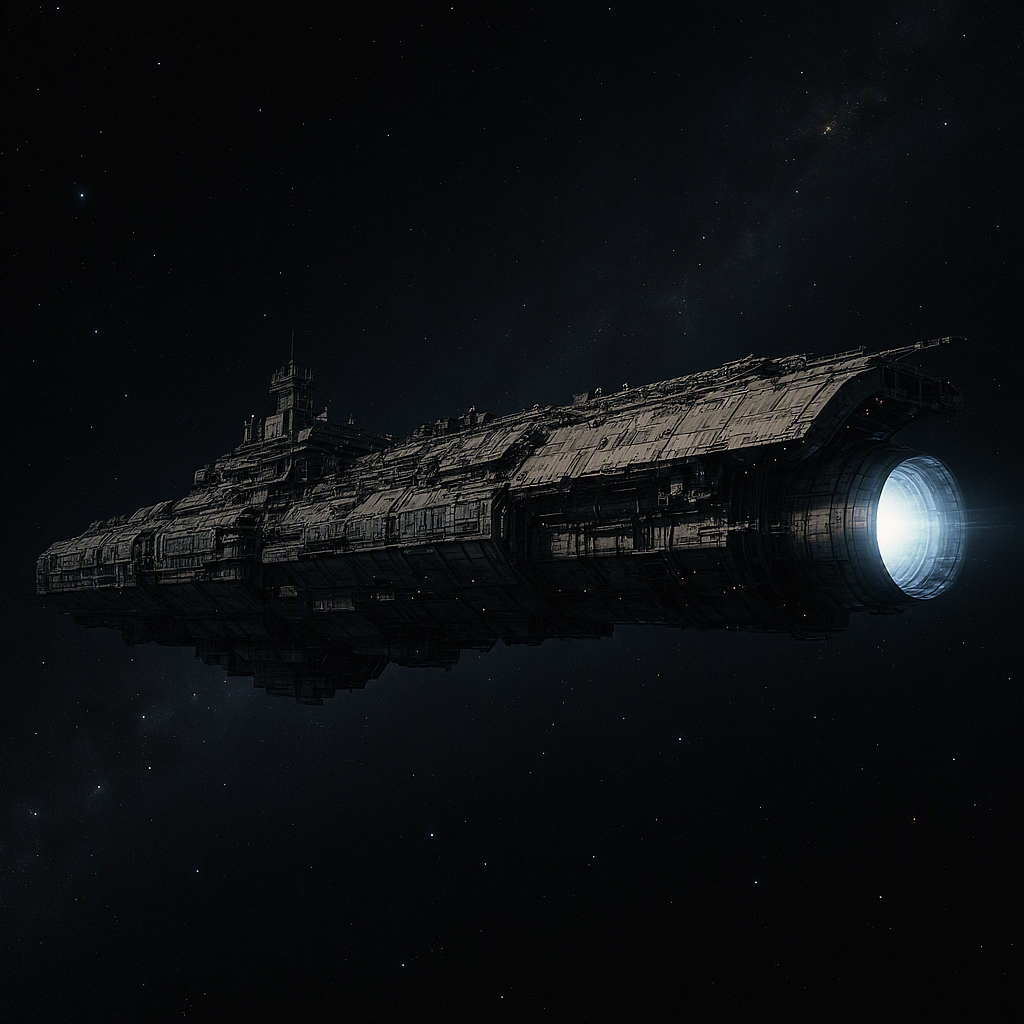
By Philippe Reclus
summary
Nuclear fusion propulsion is often cited as a leading candidate for future spacecraft propulsion because it could, in principle, provide far higher energy density and exhaust velocity than chemical propulsion and many current electric propulsion systems.
Fusion engines derive thrust from the fusion of light atomic nuclei ( typically hydrogen isotopes such as deuterium and tritium) releasing energy through mass–energy conversion, which in turn can translate into very high specific impulse and sustained acceleration for long-duration missions.
In broad propulsion terms, this promise is notable because high specific impulse can reduce propellant requirements for large mission Δv while enabling acceleration over extended periods rather than relying solely on brief, high-thrust burns.
Concept studies and systems analyses also emphasize that fusion propulsion is less a single “engine” than an integrated power-and-propulsion approach: reactor energy must be converted into useful propulsive energy while the spacecraft manages competing constraints such as power-to-mass ratio, reliability, and thermal loads.
However, the “fusion is the one true future” framing is controversial and overstated: no fusion-propulsion architecture has yet been demonstrated at mission-class scale, and major engineering hurdles remain, especially practical power conversion, thrust generation, and waste-heat rejection (including radiator mass and thermal management).
Even if fusion reactors and converters can be built, mission designers are also likely to use hybrid propulsion stacks, selecting the best technology for each phase rather than expecting a single propulsion method to dominate all spacecraft requirements.
Accordingly, the literature generally treats nuclear fusion propulsion as a potentially transformative (though still unproven) path for deep-space transport, with research efforts spanning multiple reactor and drive concepts and continuing focus on the system-level challenges needed to make fusion propulsion realizable and safe.
Lead section
Nuclear fusion propulsion is widely regarded as a promising candidate for future spacecraft propulsion because it could provide extremely high energy density and exhaust velocity, enabling much faster travel than chemical or fission-based systems. Fusion propulsion derives its energy from the fusion of light atomic nuclei (typically hydrogen isotopes such as deuterium and tritium) releasing large amounts of energy according to mass–energy equivalence.
In principle, this can translate into high specific impulse, potentially reducing the amount of propellant needed for a given mission while also allowing sustained acceleration over long periods, which could significantly shorten interplanetary (and possibly interstellar) transit times.
Compared with conventional propulsion approaches, fusion-based concepts are therefore often framed as a pathway toward more capable and potentially sustainable long-range space transportation. Advocates note that improvements in power density and thrust-to-weight characteristics could increase mission performance and feasibility, including for crewed missions, while also supporting the high delta-v requirements for frequent transport within and beyond the solar system.
Research organizations including NASA and private aerospace groups have also explored fusion propulsion spacecraft concepts, reflecting continued interest in addressing the engineering and safety challenges needed for practical deployment.
A variety of fusion propulsion architectures have been proposed, with performance often assessed through metrics such as specific impulse, thrust relative to power, and specific power (stage power requirements). Curated overviews of “fusion drives” for space propulsion also emphasize that while many concepts remain early-stage, ongoing progress (such as advances in fuels, conversion methods, and materials) could help bring higher-performing engines closer to realizability.
Background
Propulsion performance and the role of specific impulse
A common way to compare propulsion concepts is through specific impulse (Isp), a measure of propulsion efficiency expressed in seconds. Across propulsion classes, the achievable Isp varies dramatically: chemical rockets typically operate in the ~250–450 s range, while nuclear thermal propulsion can raise performance to about ~850–950 s. Electric propulsion systems such as ion and Hall-effect thrusters commonly reach ~1,000–10,000 s, and advanced plasma-based thrusters (including MPD thrusters under high-power conditions) can match or exceed those values. By contrast, fusion-based propulsion is often discussed as a qualitatively different option, with theoretical Isp values spanning ~10,000 to over 100,000 s, depending on the fusion reaction and how exhaust is configured.
Why chemical propulsion becomes limiting for long-range missions
Despite its maturity and frequent use, chemical propulsion faces intrinsic thermodynamic limits: the maximum exhaust velocity (and therefore maximum Isp) is capped by the enthalpy released by the underlying chemical reactions. For instance, hydrogen–oxygen combustion releases on the order of ~13 MJ of energy per kilogram of reactants, constraining typical exhaust velocities to roughly ~4.5 km/s and limiting the spacecraft’s achievable Δv. The Tsiolkovsky rocket equation further implies that increasing Δv requires propellant mass to grow exponentially relative to payload, making long-duration deep-space missions increasingly propellant-intensive when relying on chemical propulsion alone.
Fusion propulsion as a deep-space architecture
For cruise phases in interplanetary and potentially interstellar missions, mission design often “pivots” toward systems that can deliver much higher effective exhaust velocities. Fusion-based propulsion is frequently proposed as a backbone for such scenarios: its potential combination of high thrust and extremely high exhaust velocity would, in principle, enable shorter mission durations through sustained acceleration over long times.
Related speculative concepts (such as antimatter-catalyzed propulsion and beamed energy propulsion) are sometimes discussed as complementary approaches, especially for deep-space speed and for reducing onboard mass in certain mission profiles.
Engineering implications: waste heat and thermal management
A key practical challenge for high-energy propulsion systems, including fusion concepts, is that they generate substantial waste heat. As with other high-power engines, the waste heat must be removed efficiently; otherwise the engine and much of the spacecraft risk severe thermal damage.
In general, waste heat rejection can be mass-intensive if large radiators are used, or minimized by using lightweight structures and letting heat escape through design choices that reduce the mass of heat-carrying hardware.
In one representative design approach, the engine’s heat-producing components are separated from the radiating structures so that much of the assembly is “skeletal” or magnetically dominated, while the parts made of actual material rely on thermal control strategies. Waste heat can be handled by coolant flow through dedicated channels and by radiating the remaining heat through surface area provided by heat radiators.
For example, a cited configuration describes hydrogen flowing through cooling channels at tens of grams per second, heating from roughly ~1,420 K before passing through an array of radiating area that ultimately cools the exhaust to near ~300 K, illustrating the scale of radiator area and coolant requirements that high-power propulsion architectures may entail.
Context for “true future” claims
The framing of fusion propulsion as a “true future” is therefore grounded not only in potential performance metrics such as very high theoretical Isp, but also in the recognition that future deep-space transport likely depends on overcoming the coupled constraints of propellant mass, mission duration, and thermal engineering. While chemical propulsion remains valuable for near-term, high-thrust, short-duration needs, fusion’s promise is tied to its ability to support long-duration acceleration and dramatically different mission scaling, provided that its practical challenges, especially heat rejection and system reliability, can be solved.
Nuclear fusion fundamentals for propulsion
Basic principle
Nuclear fusion propulsion uses energy released by fusing light atomic nuclei (typically hydrogen isotopes such as deuterium (D) and tritium (T), or alternatives involving deuterium–helium-3 (D–³He)) to generate thrust for spacecraft . Because fusion draws on reactions similar to those that power stars, it promises much higher energy density than chemical propellants, enabling very high exhaust velocities and therefore potentially very large specific impulse (Isp) values .
Energy release and performance implications
Fusion converts a small amount of mass into a large amount of energy via mass–energy equivalence, releasing tremendous energy as light nuclei merge into heavier nuclei . The energy density available from fusion has been estimated on the order of 100 million to 300 million joules per gram of fuel, which is several orders of magnitude greater than typical chemical energy sources . In propulsion terms, this large energy source can translate into higher exhaust velocities than chemical combustion can achieve, offering a path to higher Δv capability with less propellant mass for long-duration, high-speed missions .
Ways fusion power becomes thrust
In fusion propulsion concepts, the reactor produces energy that is then transferred to a propulsive working system. One approach involves using fusion energy to heat and accelerate a propellant through a nozzle, including magnetically insulated nozzle designs that can yield high thrust at an operating Isp matched to system design . More broadly, fusion propulsion architectures are often discussed as integrated “power-and-propulsion” systems where the fusion core supplies power not only for thrust generation but also for high-demand spacecraft functions such as instruments and communications, improving overall mission capability .
Fuel cycles and key tradeoffs
Commonly discussed fusion fuel cycles for spacecraft include D–T and D–³He. Their suitability depends on factors such as reaction characteristics, fuel availability, system complexity, and radiation output, all of which influence shielding and spacecraft integration requirements . For propulsion, the practical choice of fuel cycle affects both performance potential and engineering feasibility, including reactor design and how the resulting radiation environment is managed for crewed or sensitive electronics operations .
Radiation and shielding fundamentals
A defining feature of many fusion reactor designs is the radiation environment produced by the fusion process and any associated reaction products. Feasible shielding approaches include layered concepts that combine materials effective against different radiation types, low atomic number materials (e.g., Be, LiH, and B₄C) to attenuate neutrons and high atomic number materials (e.g., tungsten, W) to attenuate gamma rays . Shielding design studies also emphasize thermal constraints: most shielding materials perform best in temperature ranges roughly from 300 to 900 K, and cooling of shield components is typically desirable to maintain performance and manage material degradation . Such shielding requirements are a fundamental propulsion systems constraint because they can add mass and complexity while enabling acceptable crew and avionics exposure levels .
Fusion propulsion architectures
Overview
Fusion propulsion architectures aim to leverage the high energy density and high exhaust velocity potential of nuclear fusion to enable rapid, sustained acceleration for interplanetary and interstellar mission profiles. In contrast to propulsion concepts that rely on large onboard propellant reserves or heavy power-conversion chains, fusion-centric designs seek to position the fusion core as a primary energy source that can be integrated with adaptable mission systems across multiple flight phases.
Integration with hybrid mission systems
A fusion engine is rarely treated as a standalone solution for all mission phases; instead, fusion propulsion architectures commonly adopt a hybrid, systems-level approach that combines multiple propulsion technologies. These architectures orchestrate different subsystems (such as chemical launch stages, nuclear or electric tugs, high-efficiency plasma thrusters for cruise and maneuvering, and specialized modules for insertion, landing, or flyby operations) so that each phase uses the propulsion mode best matched to its power, thrust, efficiency, and operational constraints.
This modular philosophy improves robustness and flexibility as mission requirements evolve toward destinations such as Mars, the asteroid belt, or beyond the heliosphere.
Fusion as a mission backbone
In fusion-led architectures, the fusion system is typically envisioned as the backbone for long-duration transit, benefiting from the ability to sustain high exhaust velocities and continuous acceleration over extended periods. If fusion technology matures and safety and reliability challenges are resolved, fusion propulsion could shorten mission timelines while supporting scalable infrastructure for deep-space transportation networks.
Direct fusion drive and integrated energy-to-propulsion concepts
One prominent fusion architecture class is designed to reduce mass and complexity by coupling fusion energy directly to both thrust production and onboard power generation. The Direct Fusion Drive (DFD) concept, developed at the Princeton Plasma Physics Laboratory, uses a field-reversed configuration (FRC) to sustain and control fusion plasma. In this architecture, a propellant (such as helium or hydrogen) is injected into the outer region of the plasma, heated by fusion byproducts, and then expelled through a magnetic nozzle at very high velocities.
By using fusion energy to heat the propellant without heavy intermediary conversion hardware, such designs aim to decrease the overall mass of the propulsion system and improve integration efficiency.
Adaptive and modular activation across flight phases
Fusion propulsion architectures are often described as adaptive rather than monolithic: propulsion elements may be activated, throttled, or deactivated as mission needs change. Modular integration can also allow redundancy and phase-optimized thrusting, enabling a mission to transition between propulsion modes depending on whether high-thrust maneuvers, efficient cruise, or precision orbital insertion is required.
This approach supports long-term mission planning under constraints such as limited power availability, radiation environment, and evolving scientific priorities.
Outlook and role in future transport
Within broader propulsion roadmaps, fusion propulsion is frequently positioned alongside other emerging technologies, particularly when mission design calls for both high performance and flexible scaling. Fusion systems may complement beamed energy methods for lightweight, rapid acceleration scenarios, while plasma and magnetoplasmadynamic thrusters can provide high-specific-impulse maneuvering capabilities during later mission phases.
As onboard power generation improves through next-generation space-qualified energy sources, fusion propulsion architectures are expected to play an increasingly central role in enabling high-efficiency, high-mass transport across the solar system and beyond.
Spacecraft-level performance drivers (mass and power budgets)
Power-to-mass ratio and long-duration feasibility
For spacecraft propulsion architectures based on fusion (and other high-energy concepts), mission performance at the spacecraft level is strongly governed by the available power-to-mass ratio. Because high exhaust velocities are typically associated with low thrust, effective propulsion depends on how efficiently the spacecraft can convert onboard (or otherwise supplied) power into thrust while managing the vehicle mass required by power generation and thermal rejection.
In fusion-based “afterburner” concepts, for example, injection of propellant into the fusion region can raise thrust to usable levels per megawatt, but the overall propulsion capability still scales with the amount of power the spacecraft can carry or access.
Waste heat rejection and radiator mass penalties
A central spacecraft-level constraint for fusion (and other high-energy propulsion) is waste heat. High-energy engines generate heat that must be radiated away to avoid overheating and structural failure. The dominant mass driver often becomes the thermal management system, particularly radiators sized to reject the computed waste-heat load.
Concepts discussed in fusion-rocket analyses emphasize that large heat radiators can become mass-intensive, while design strategies that reduce radiator requirements (such as using skeletal frameworks that do not obstruct radiative heat flow) can help mitigate the mass penalty.
Integrating fusion power into thrust and thermal budgets
At the system level, the relationship between generated power, jet power, and waste heat determines both propulsion performance and radiator sizing. In one worked example, a notional jet power is related to the fusion power generation through efficiency assumptions, where only a fraction of generated energy becomes exhaust-jet power and the remainder appears as waste heat.
This waste heat then drives the required radiator surface area through blackbody-like radiative rejection relationships, linking the thermal budget directly to spacecraft mass.
Electric propulsion power dependence vs thrust limitations
While the mass efficiency benefits of advanced electric propulsion are often attractive for payload-heavy missions, spacecraft-level propulsion budgets must account for their low thrust-to-weight characteristics and the need for external power sources. Such systems can carry less propellant for a given mission delta-v, but they are limited by how much electrical power the spacecraft can supply (e.g., via solar arrays or nuclear-electric generators) and by engineering issues that affect sustained thrust generation.
As a result, fusion-powered concepts are often framed as potential solutions for scenarios where high instantaneous acceleration and interplanetary mission times must both be addressed, albeit still subject to power and thermal constraints.
Example system-level design trade: power and thermal efficiency
Because the thermal system mass is sensitive to overall efficiency assumptions, spacecraft designers must treat propulsion as an integrated power-thermal-structures problem rather than a standalone engine problem.
In the example described, modest changes in efficiency parameters affect the fraction of fusion energy that becomes useful exhaust power versus thermal losses, which in turn changes waste-heat load and radiator sizing.
Consequently, even when fusion offers very high energy densities and favorable exhaust-velocity characteristics, the spacecraft-level mass budget frequently becomes dominated by power supply mass and thermal rejection requirements, making optimization of power generation efficiency and heat management essential for practical mission architectures.
Claimed advantages versus alternative propulsion
Supporters of nuclear fusion propulsion argue that it offers a superior path for long-duration, high-performance spacecraft missions when compared with chemical (andunder many circumstances) conventional electric propulsion systems. In this view, fusion engines reduce the propellant-mass penalty that limits classical rocket designs and can deliver thrust suitable for interplanetary trajectories without the extreme power system demands that constrain some electric thruster concepts.
Specific impulse, efficiency, and mission flexibility
Electric propulsion systems are often highlighted for their high specific impulse and propellant economy relative to chemical propulsion, because they accelerate charged particles using electromagnetic fields rather than relying on the energy released by chemical reactions.
However, electric propulsion is generally characterized by low thrust levels and a need for substantial external power, making it less suitable when rapid acceleration or short mission timelines are required.
In contrast, fusion advocates claim that fusion propulsion can act as a “middle ground” between high-thrust chemical stages and high-specific-impulse low-thrust electric systems. The argument is that a fusion engine’s performance is not only about exhaust velocity (and thus specific impulse) but also about the practical ability to generate meaningful thrust given the spacecraft’s power-to-mass ratio. For interplanetary travel, proponents emphasize that (if sufficient power density can be achieved, the engine can be “geared” to trade some exhaust velocity for higher thrust, enabling useful acceleration rates over months rather than years.
This perspective aligns with broader propulsion comparisons that stress the necessity of evaluating trade-offs among specific impulse, thrust, required power, and cost rather than focusing on a single metric.
Power-to-mass ratio versus thrust limitations
A recurring claim in favor of fusion propulsion is that many advanced propulsion concepts ultimately become limited by power availability onboard the spacecraft. For example, ion and Hall-effect thrusters can reach very high exhaust velocities but produce minuscule thrust, often requiring extended continuous operation to produce substantial Δv.
Likewise, high-power electric or plasma thruster concepts require substantial electrical power and careful engineering of system scalability and power generation.
Advocates argue that fusion engines are constrained less by exhaust velocity itself and more by the power-to-mass ratio available to the spacecraft propulsion system, suggesting that power system improvements could translate more directly into higher thrust output while keeping efficiency competitive for long-range missions.
In particular, one stated rule of thumb is that the spacecraft should be capable of at least a modest acceleration (e.g., around 0.05 m/s²) to avoid prohibitively long orbital-change times, even if doing so requires reducing exhaust velocity somewhat to increase thrust.
Claimed advantages over alternative propulsion architectures
Chemical propulsion constraints
Chemical propulsion remains essential for Earth ascent and for operations demanding high thrust over short durations, but it is often criticized for poor scalability to sustained deep-space acceleration due to limitations on exhaust velocity imposed by combustion energy and thermodynamics.
In this framing, fusion propulsion is presented as a way to overcome the “propellant-hungry” scaling of chemical rockets for large Δv requirements.
Electric and plasma propulsion trade-offs
Electric propulsion is frequently characterized as fuel-economical but slow to change orbits because of its low thrust-to-weight ratio.
Other plasma-based and higher-performance electric concepts (such as magnetoplasmadynamic thrusters) are sometimes described as promising candidates for improving thrust while retaining better propellant efficiency than chemical systems, though their adoption depends on achieving very high power outputs and addressing practical engineering challenges.
Fusion advocates argue that fusion propulsion can better satisfy the combined requirements of thrust magnitude and long-duration capability for demanding missions, rather than forcing an “all-or-nothing” choice between chemical thrust and electric efficiency.
Overall comparative rationale
In sum, the claimed advantage of nuclear fusion propulsion is not that it universally dominates every metric, but that it targets a key bottleneck in spacecraft propulsion comparisons: the ability to sustain useful thrust for mission-relevant acceleration while managing propellant mass and overall power-system constraints.
This rationale reflects the broader consensus that propulsion selection must be made contextually, using quantitative comparisons across specific impulse, thrust, power requirements, and other performance drivers, since no single approach is optimal for all mission profiles.
Engineering hurdles and remaining feasibility constraints
Developing nuclear-powered propulsion concepts for crewed deep-space missions faces substantial engineering hurdles, particularly where high power, high radiation, and long operational lifetimes must be achieved simultaneously. Even where core physics and early demonstrations appear promising, scaling to mission-class systems remains a major feasibility constraint.
High-power scaling and system mass constraints
For nuclear electric propulsion (NEP) systems intended to support long-range missions, one of the central challenges is achieving multi-megawatt-class electrical output. For example, developing a 1–2 MWe NEP system for a baseline mission would require increasing power by orders of magnitude beyond existing NEP technology demonstrations (flight or ground).
Meeting mission requirements also depends on maintaining stringent mass limits for propulsion power and subsystems, with example targets including maximum specific mass values of 5 kg/kWe for the electric propulsion (EP) system’s power-processing unit (PPU) and 15 kg/kWe for other combined subsystems.
If these mass and power targets are not met, the overall spacecraft propulsion system can exceed feasible limits for launch, thermal control, and integration, effectively constraining mission architectures.
Radiation and survivability of power electronics
A key feasibility limitation is the need for reliable power electronics and power management hardware under high radiation and high temperature conditions. For high-power NEP architectures, the development and validation of PPUs are expected to be challenging due to both the electrical component radiation environment and the extreme power levels involved.
This survivability requirement extends beyond component lab testing, requiring system-level assurance that performance and reliability will hold over the mission lifetime.
Fuel and reactor design uncertainties
Mission-class nuclear propulsion designs also depend on reactor concept decisions that directly affect materials, shielding, and fuel qualification. These include fuel enrichment choices (e.g., HEU versus HALEU) and neutron spectrum configuration (fast versus moderated), which in turn determine specific fuel, cladding, and structural material selections.
Past irradiation testing may not be recent enough to remove risk entirely; for instance, some reference fuel systems have supporting irradiation heritage but the underlying testing campaign may be decades old, requiring technology recapture and additional validation to ensure manufacturing readiness and performance confidence.
Limited technology development ramp and validation needs
Feasibility constraints are further compounded by programmatic and development-time realities. As of the end of 2020, there were no NEP component, subsystem, or system development efforts underway for producing crew-ready flight NEP by a target 2039 timeframe, implying the need for a rapid, large ramp-up in development and testing activities.
The resulting roadmap would need to include concurrent modeling and simulation (M&S) at multiple levels (from physics through system modeling) as well as lifetime demonstration and validation testing for each NEP subsystem.
Propulsion performance limits and energy requirements
Even if nuclear power generation and conversion technology can be realized, propulsion effectiveness remains constrained by fundamental relationships between energy, thrust, and available power. For electric propulsion, achieving meaningful thrust is intrinsically difficult because thrust depends on high power while scaling is limited by constraints such as energy conversion efficiency and the effective exhaust velocity relationship.
As a result, nuclear approaches must provide sufficiently high power outputs to generate appreciable thrust for practical mission durations, rather than relying solely on theoretical advantages of nuclear energy.
Mission-fit examples and representative use cases
Modular hybrid propulsion architectures
A common theme in advanced propulsion planning is that no single propulsion technology is universally optimal for every phase of a mission. Instead, architectures are increasingly treated as modular and adaptive, switching between propulsion modes as mission requirements evolve, with systems potentially activated, deactivated, or even detached to match changing needs for thrust, efficiency, and operational constraints.
Such systems-level thinking is intended to coordinate complementary technologies rather than rely on a single “breakthrough” engine for all mission segments.
Human Mars missions: faster transit and reduced operational risk
Fusion propulsion has been proposed as a pathway to dramatically shorten crewed Mars travel time compared with conventional chemical trajectories. Round-trip mission durations using chemical propulsion are often discussed as taking on the order of about 500 days total, driven by long coasts, timing of planetary alignment, and the need for repeated propulsive maneuvers for departure and return.
By contrast, fusion-powered concepts have been described as potentially enabling a Mars trip on the order of 90 days (or less) per leg, using continuous thrusting with comparatively small amounts of fusion fuel and reducing or eliminating long waiting periods for orbital realignment.
Lower propulsive logistics at the mission level (such as minimizing the need for refueling at Mars) has also been highlighted as a contributor to mission safety and to reducing crew exposure to deep-space radiation during extended transit and coasting phases.
In this framing, fusion propulsion is positioned not only as a performance upgrade but as an enabler of architectures that allow abort-return scenarios and more flexible mission operations during interplanetary flight.
Electric and plasma thrusters in hybrid roles
Even when a mission’s primary propulsion “future” is framed around fusion, electric and plasma-based thrusters continue to play representative roles in hybrid architectures, particularly for phases requiring high efficiency and fine maneuvering rather than rapid departure from Earth.
Ion and Hall-effect thrusters have demonstrated feasibility in interplanetary and satellite mission contexts, with NASA missions such as Deep Space 1 and Dawn illustrating the ability of electric propulsion to accumulate large cumulative \u0394v over long durations.
Hall-effect thrusters, meanwhile, have been widely adopted for geosynchronous station-keeping and related satellite operations.
However, electric propulsion is also constrained by low thrust-to-weight ratios and the need for substantial onboard power (from solar arrays or nuclear-electric generators), limiting its usefulness in short-duration, high-acceleration scenarios.
As a result, fusion engines are often discussed as better suited for high-performance deep-space transport, while electric/plasma systems serve complementary roles such as orbital insertion, station keeping, and precise trajectory shaping.
Deep-space cargo transport and scalable interplanetary logistics
Fusion propulsion concepts have also been described as enabling high \u0394v capability and potentially improving the feasibility of frequent, fuel-efficient transport between destinations such as low Earth orbit and lunar space.
This matters for cargo-focused architectures because the overall mission advantage of fusion extends beyond “speed” to include reductions in propellant mass and improved mission cadence, properties that can support more continuous robotic and, potentially, crewed operations across the broader solar system.
In a representative use case, a mission could use conventional chemical propulsion for initial launch and Earth orbit insertion, transition to a nuclear-powered tug or fusion-based transport for interplanetary legs, and then use electric propulsion for precise arrival phasing or orbit adjustments at the destination.
This mirrors the broader idea that different propulsion technologies are best matched to different mission phases rather than treated as mutually exclusive replacements.
Radiation and shielding-driven mission design
Mission-fit examples for nuclear propulsion also incorporate practical constraints such as radiation management. For nuclear-electric propulsion systems, shielding design approaches such as the “shadow shield” concept emphasize attenuation of radiation through both distance and engineered barriers positioned to protect the spacecraft payload region.
Such shielding considerations reflect why fusion-enabled mission concepts often pair propulsion performance benefits with detailed spacecraft design tradeoffs, including mass allocation for radiation transport control and thermal management.
Representative fusion mission scenarios (one-year round-trip and interplanetary studies)
Fusion propulsion studies have evaluated detailed trajectory and mission architecture concepts for long-duration journeys, including one-year-scale round-trip mission designs for advanced nuclear propulsion concepts.
Additional work has also examined the feasibility of different fusion fuel approaches (such as deuterium–tritium (DT) and deuterium–helium-3 (D–He3)) for interplanetary propulsion, including discussions of efficiency, safety, and economic viability.
These studies collectively support the premise that fusion propulsion’s “mission fit” depends on matching engine and system-level choices (including fuel form and reactor-heating performance requirements) to the mission’s timetable, \u0394v needs, and safety constraints.
Comparison with other advanced propulsion concepts
Specific impulse and overall performance
In comparisons of advanced space propulsion concepts, specific impulse (a standard measure of propulsion efficiency) provides a clear first-order distinction between mature chemical systems, more advanced electric systems, and high-performance concepts based on nuclear or exotic physics.
Chemical propulsion typically provides specific impulses in the relatively low range of 250–450 seconds.
Nuclear thermal propulsion nearly doubles this performance, with reported values in the range of 850–950 seconds.
Electric propulsion systems (including ion and Hall-effect thrusters) routinely achieve specific impulses between 1,000 and 10,000 seconds.
More speculative advanced plasma approaches, such as MPD thrusters, can match or exceed these values under high-power conditions.
Fusion-based propulsion stands in a higher-performance class, with theoretical specific impulses spanning from roughly 10,000 up to over 100,000 seconds depending on the reaction mechanism and exhaust configuration.
At the extreme end of speculation, fusion-adjacent or exotic proposals (including antimatter-catalyzed concepts and highly speculative “quantum vacuum” ideas) are sometimes framed as potentially exceeding or redefining these performance regimes, though many remain unverified.
Thrust, power, and mission architecture trade-offs
A meaningful evaluation of propulsion technologies requires more than comparing specific impulse; performance depends on thrust-to-weight ratio, energy density, power requirements, technological maturity, and scalability.
Propulsion systems therefore tend to be effective within particular mission contexts rather than dominating all others simultaneously.
For instance, chemical propulsion remains the workhorse for launch and short-duration, high-thrust maneuvers, while electric propulsion is especially well-suited to sustained, low-thrust operations where power and mission duration are available.
Fusion-based architectures are often discussed as a bridge between the two: offering a combination of high efficiency and potentially useful thrust for long-range interplanetary or precursor deep-space travel, especially during cruise phases where continuous or long-duration acceleration can reduce overall trip times.
Concept studies for fusion-based spacecraft can illustrate these mission advantages: for example, one performance analysis reports that short Mars trip times on the order of days are possible (e.g., ~9 days), while longer-range destinations can still be approached with relatively rapid transit (e.g., Pluto in about a year), with payload capabilities depending on mission mode.
In contrast, some alternative advanced concepts emphasize very different operational principles. Beamed energy propulsion, for example, is frequently presented as a method to provide very high effective delta-v with reduced onboard propellant mass, but it can be limited by beam steering, tracking precision over astronomical distances, and receiver material survivability under extreme flux.
Similarly, pure antimatter propulsion is often treated as infeasible in near-term engineering terms because of limitations in producing and storing antimatter, though antimatter is sometimes proposed as a catalyst for fusion initiation rather than as a direct thrust source.
Maturity level and feasibility
Technological readiness (and the underlying engineering feasibility) strongly shapes the “true future” question for any propulsion concept. Chemical and electric propulsion are flight-proven and widely deployed.
Nuclear thermal propulsion, while not yet universally flight-tested for broad applications, has heritage programs (such as NERVA) and ongoing renewed development.
Fusion propulsion remains experimental, with representative approaches such as the Direct Fusion Drive and related configurations still requiring in-space demonstration.
Antimatter-based propulsion remains earlier still: much of its status is limited to laboratory-scale production, theoretical modeling, and conceptual engine designs.
For quantum vacuum propulsion, claims are generally treated with skepticism because no peer-reviewed, reproducible experimental demonstration has unambiguously shown propulsion traceable to quantum-vacuum effects while satisfying established conservation laws.
As a result, when comparing fusion propulsion with other advanced concepts, fusion is often viewed as the most plausible high-performance pathway among those aiming to remain consistent with established physics while still offering performance targets far beyond chemical and conventional electric systems.
Comparison with specific advanced alternatives
Beamed energy propulsion
Beamed energy propulsion is sometimes considered for missions requiring large delta-v with minimal onboard mass, but practical implementation is constrained by the need for extremely precise beam pointing and tracking, as well as by the technical requirements placed on ultra-light reflective or absorbing sails/receivers.
Atmospheric distortion and energy loss further complicate ground-based beam delivery, frequently motivating orbital or lunar transmission infrastructure.
Antimatter-catalyzed micro-fusion
Antimatter-catalyzed propulsion is frequently discussed as a more physically plausible use of antimatter than direct annihilation thrust, because it uses small quantities of antimatter (commonly framed as antiprotons) to initiate or accelerate fusion ignition in a deuterium–tritium target.
While conceptual work exists and performance potential is often framed as dramatic (potentially enabling very high fractions of light speed in optimistic scenarios) practical antimatter production, storage, and system-level engineering barriers remain substantial.
Nuclear and non-fusion exotic concepts
Beyond nuclear thermal and electric systems, the dominant comparison points for fusion propulsion are the performance envelope (high theoretical specific impulse) and the feasibility path (moving from experimental devices toward credible propulsion demonstrations).
Exotic alternatives such as quantum-vacuum-drive proposals are sometimes discussed in popular or speculative contexts, but the scientific community has generally emphasized the lack of reproducible experimental evidence and the need for theoretical consistency.
As a result, fusion propulsion is often positioned as the more actionable “advanced” option relative to concepts that currently lack robust empirical grounding.
Feasibility timelines and deployment scenarios (uncertainty-focused)
Development and validation cadence
Prospective nuclear-fusion propulsion architectures are often framed as long-horizon technology programs whose feasibility depends on sustained advances in high-energy physics, materials performance, and the miniaturization and reliability of spaceborne control and power electronics.
Because fusion-relevant subsystems involve coupled phenomena (such as power conversion, thermal management, radiation environment effects, and plasma stability) progress is typically evaluated through iterative validation rather than a single demonstration milestone.
Within broader space-propulsion planning, fusion is frequently treated as part of an evolving “systems-level” approach: propulsion capabilities are expected to be integrated, staged, or modularized as mission requirements change over time.
This implies that deployment timelines are less about achieving a universal propulsion breakthrough and more about creating flexible propulsion infrastructures that can be selectively applied to different mission phases and destinations.
Uncertainty drivers affecting timelines
Uncertainty in fusion-engine timelines is commonly linked to both scientific and engineering risk. On the scientific side, experimental validation is required to test assumptions ranging from plasma confinement behavior (including magnetically confined concepts) to deeper, less directly observable physical effects relevant to advanced propulsion hypotheses.
On the engineering side, scaling from earlier, lower-power demonstrations to operational power levels introduces new controllability and integration challenges, especially where thermal, electrical, and dynamic interactions are expected to differ substantially at full mission scale.
In addition, policy, regulatory, safety, and ethical considerations are expected to shape deployment pacing, since high-energy propulsion technologies may require new frameworks for launch authorization, radiation safety, and international coordination.
These factors can extend schedules even when technical prototypes appear promising, particularly for crew-adjacent or human-rated missions.
Deployment scenarios: staged adoption rather than immediate replacement
A near-term deployment scenario for fusion propulsion is often envisioned as not replacing all existing propulsion systems immediately, but instead augmenting them in a staged manner. In this approach, missions can begin with conventionally matured propulsion (e.g., chemical or nuclear-electric tugs) and transition to higher-performance propulsion elements once payload conditions, power availability, and operational maturity permit.
Such staged architectures reduce risk by limiting early reliance on an immature technology for the most demanding mission segments. For deep-space cruise phases, fusion-based propulsion is sometimes treated as a potential “backbone” technology in which high thrust combined with very high exhaust velocity could reduce transit times through sustained acceleration over long durations.
However, deployment of fusion for interplanetary or interstellar-class missions is contingent on resolving safety and technical maturity concerns, as well as demonstrating operational stability over relevant mission timescales.
Interaction with complementary propulsion concepts
Fusion propulsion timelines may also be influenced by how it competes and cooperates with other advanced propulsion concepts. Beamed energy propulsion is often viewed as a complementary option (particularly for lightweight or unmanned spacecraft, where ground- or orbit-based energy sources can reduce onboard mass requirements.
Likewise, speculative or emerging concepts such as antimatter-catalyzed propulsion are sometimes discussed as future high-energy-density pathways for extreme-speed missions, though their operational readiness is expected to lag behind more immediately testable approaches.
In consequence, fusion’s deployment scenario may be optimized as part of a portfolio: fusion could become the primary driver for long-duration cruise, while beamed energy and other technologies serve as auxiliary or interim solutions during periods of transitional capability growth.
Toward practical timelines: iterative milestones and mission qualification
Given the uncertainty profile, fusion propulsion feasibility is more likely to be advanced through a sequence of experimental validations and progressively integrated demonstrations. These may include laboratory prototypes, in-space alignment and operational trials, and progressively more demanding subsystem tests designed to reduce both modeling uncertainty and operational risk.
Under an uncertainty-focused planning philosophy, qualification could be achieved through progressively complex mission activities, starting with cargo missions and moving toward crewed applications only after sufficient evidence supports reliability and controllability assumptions.
Sources and primary quantitative references
Research and proposals for advanced spacecraft propulsion (particularly nuclear-fusion–based and related electric propulsion concepts) have been supported by a mixture of agency technical memoranda, conference papers, and training materials from international organizations. Key primary quantitative references used in the assessment of such systems include NASA technical reports, IAEA-organized briefings, and mission/architecture requirement documents that specify performance targets and design constraints.
NASA technical memoranda and fusion-propulsion system documentation
A central primary source frequently cited for “spherical torus” nuclear fusion propulsion concepts is NASA’s technical memorandum NASA/TM-2005-213559 (March 2005), including its AIAA-linked presentation materials (e.g., AIAA–2001–3805). This document is presented as the basis for system-level discussion of a piloted spherical torus nuclear fusion propulsion architecture and includes quantitative performance plots (such as thrust and specific impulse versus propellant/operating parameters).
In particular, the report includes figures used to infer thrust and Isp under specified firing assumptions and propellant usage, which have been discussed in subsequent evaluations of internal consistency and parameter assumptions.
Additional NASA listings and bibliographic entries for the same spherical torus propulsion work are also documented, indicating its role as a foundational technical reference within the broader literature on fusion propulsion.
Quantitative mission requirements for electric propulsion (NEP)
For nuclear-electric propulsion (NEP) and electric propulsion architectures, primary quantitative references often include mission and subsystem requirement statements specifying performance targets, efficiency goals, power levels, and lifetime constraints. One such quantified set of requirements describes an Isp goal of 2,000 s or more, thruster efficiencies greater than 50%, and thruster power levels on the order of 100 kWe or more to reduce integration complexity.
It further specifies operational lifetime and availability constraints (e.g., minimum mission operating time on the order of years and corresponding operational hours), which translate into reliability and spare-unit mass implications.
NEP system design trades are also tied to quantitative parameters such as system specific mass (kg/kWe), power-conversion efficiency, waste-heat rejection temperature, EP subsystem efficiency, specific impulse, and overall reliability over the mission lifetime.
The same source notes that while NEP concept modeling shows promise at a concept-analysis level, scaling results from earlier (lower-power) programs to the higher power levels needed for certain missions (e.g., MWe-class applications) introduces feasibility uncertainty due to scaling effects in fuel/propellant architecture and the associated thermal and power demands.
Related performance/metrics references and supporting quantitative modeling
When propulsion proposals claim quantitative performance impacts from shielding, radiation transport, or other engineering subsystems, primary references may include standard radiation-transfer formalisms used to estimate real delivered dose/intensity compared with simplified models. For example, the buildup factor, which depends on shielding thickness measured in mean free paths, source energy, and geometry, has empirically tabulated functional forms for particular materials and energies, including quantitative examples for lead at around 1 MeV.
Such modeling is relevant to the assessment of how much radiation actually reaches a point of interest compared with predictions based only on exponential attenuation.
Similarly, propulsion performance characterization can include quantitative efficiency parameters that relate to engine behavior; for instance, “specific thrust” is noted as a related metric used to characterize turbine-engine-type performance, illustrating how performance comparisons may require consistent definitions across propulsion classes.
IAEA-organized educational and overview materials
International Atomic Energy Agency (IAEA) materials provide structured overviews that contextualize advanced propulsion technologies and developments. An example is an IAEA-organized webinar that discusses recent advances and perspectives relevant to the broader technology landscape.
While such materials may not always serve as the sole source for system performance calculations, they often function as high-level pointers to the most recent technical work and studies for further primary reference review.
Notes on foundational evidence standards for extraordinary claims
For propulsion concepts that rely on effects not yet supported by peer-reviewed experimental demonstrationssuch as claims of propulsion from quantum-vacuum effects, primary references must be accompanied by rigorous experimental methodology and conservation-law consistency. The literature stresses that, to date, peer-reviewed experimental results have not unambiguously demonstrated such (propulsion in a way that withstands rigorous scrutiny, highlighting the importance of transparent methods, independent replication, and theoretical coherence when evaluating quantitative claims.
Environmental, safety, and regulatory considerations (system-level)
Environmental impacts and heat management
Space propulsion concepts that rely on nuclear or high-energy processes raise environmental concerns at the system level, primarily related to energy deposition and heat rejection. For nuclear thermal and fusion-based systems, waste heat is generated during operation and must be rejected through radiative cooling or dedicated radiator/heat-rejection architectures. Deploying and assembling large heat rejection systems in orbit can be mechanically and operationally challenging, particularly when radiator panels and fluid transport components must be folded to fit within launch vehicle fairings without compromising coolant seals.
These constraints affect mission architecture and influence how regulators may evaluate system reliability and containment of hazardous materials.
Nuclear safety: containment, accident tolerance, and radioactive release
Nuclear propulsion technologies face substantial safety constraints, especially because failure modes must be considered across launch, ascent, on-orbit operation, and end-of-life scenarios. Reactor safety is a foremost concern; launch failures or accidents could disperse radioactive material into the atmosphere, requiring robust containment designs and launch protocols supported by international agreements governing nuclear materials in space.
Mitigating these risks typically includes conservative containment engineering, fail-safe operational procedures, and coordinated regulatory frameworks for handling and transport.
Fusion system hazards: radiation, material degradation, and tritium lifecycle
Fusion thrust concepts are also linked to significant radiological and environmental considerations. In deuterium–tritium (D–T) approaches, a large fraction of reaction energy is carried by neutrons, which cannot be directly used for propulsion and can be a radiation hazard. Neutron exposure also drives material activation and reactor damage, gradually embrittling and degrading structural components over time.
Additionally, tritium is radioactive (half-life about 12.32 years), creating both leak risk and lifecycle management challenges because tritium cannot be stored indefinitely.
Many designs therefore rely on in-situ tritium breeding using lithium blankets around the reactor, which introduces additional activation and heat disposal pathways that must be accounted for during environmental and safety assessments.
Fusion system operations must also address the production and availability costs and constraints associated with tritium handling and breeding. Tritium generation typically requires reactor operation and specialized infrastructure, increasing both system complexity and the burden of radioactive waste management.
Antimatter propulsion: catastrophic release and shielding burden
Antimatter-based propulsion concepts present distinct system-level safety and ethical risks. Any containment failure could produce catastrophic release of energy, including severe hazards in populated or orbital environments. Radiation shielding requirements are also substantial because annihilation and subsequent reactions can generate intense bursts of high-energy radiation such as gamma rays and energetic neutrons. Providing adequate shielding increases spacecraft mass and may offset performance benefits, while also affecting re-entry/mission end-state risk calculations.
Electric propulsion constraints and spacecraft interaction risks
Electric propulsion systems (often valued for low propellant consumption) carry their own system-level constraints. Their low thrust-to-weight ratios limit suitability for rapid high-acceleration scenarios, which can indirectly affect operational safety margins for collision avoidance, emergency maneuvers, and abort strategies. Additionally, engineering challenges such as ion-thruster grid erosion, plume divergence, and interactions between the plume and spacecraft surfaces or electronics can create reliability and hazard concerns that influence safety case development.
Regulatory and ethical governance: international coordination and long-horizon oversight
Across nuclear and high-energy propulsion pathways, regulators and policymakers emphasize internationally harmonized rules for the use of radioactive materials, spacecraft safety assurance, and risk communication. Deployment may require international agreements and cooperation to navigate regulatory, safety, and ethical considerations, particularly for technologies with long-lived or potentially dispersible hazards.
Because many enabling technologies depend on long-horizon research and iterative experimental validation, authorities are likely to require demonstrable progress through prototype testing and rigorous evidence standards (ranging from laboratory validation to orbital beam-alignment or deeper investigations into fundamental processes) before approving operational deployment.
This governance approach also supports broader public trust by applying open-minded, scientifically grounded methodologies while ensuring that safety and environmental risk controls scale with technological maturity.
Debate and critique of “one true future” claims
Scientific uncertainty and evidentiary standards
Claims that nuclear fusion is the single “true” future of spacecraft propulsion are frequently overstated relative to the current state of experimental verification and engineering demonstration. While fusion energy has made progress toward achieving net energy gain, the broader challenge for propulsion is not only producing fusion reactions, but translating those reactions into reliable, efficient, and flight-ready propulsion systems with validated performance over relevant operational conditions.
Moreover, speculative propulsion concepts (sometimes including more exotic approaches such as quantum-vacuum manipulation) have not produced peer-reviewed experimental results that unambiguously demonstrate propulsion in a manner consistent with established conservation laws, and the field remains cautious about extraordinary claims without extraordinary proof.
Systems engineering realities: propulsion is mission-dependent
“Single winner” narratives often underplay that spacecraft propulsion requirements vary substantially by mission architecture. Key performance metrics, such as specific impulse, thrust-to-weight ratio, energy density, power requirements, technology maturity, and scalability, do not point to one technology dominating all phases of all missions.
As a result, even if fusion becomes viable, mission designers may still prefer different propulsion approaches for different regimes (e.g., early acceleration, cruise efficiency, or high-speed flybys), leading to architectures that combine multiple propulsion modalities rather than relying on a solitary engine type.
Competing fusion paths and the challenge of practical power conversion
Even within the fusion category, approaches differ in confinement concepts, fuel cycles, and engineering constraints, and each introduces distinct uncertainties for propulsion use. Public discussions and research programs highlight that the critical step is achieving a reaction energy output that exceeds the injected energy (commonly framed around “breakeven”) and then sustaining conditions with sufficiently large gain to support practical power production.
For spacecraft applications, propulsion feasibility also depends on how efficiently fusion energy can be converted into usable thrust (directly or via intermediate power systems), how system mass scales, and how components withstand radiation and thermal loads. These engineering factors are often less emphasized in “one true future” narratives than in the underlying physics milestones.
Comparison with other near-term and complementary technologies
Fusion is not the only candidate for reducing propellant limitations in spaceflight, and many mainstream propulsion alternatives address different constraints. For instance, beam-driven energy concepts can reduce onboard mass burdens for lightweight craft, and antimatter-catalyzed systems are sometimes discussed as transformative for deep-space transport if specific technological and safety hurdles can be overcome.
Even where fusion is viewed as a strong long-term candidate, these comparisons support the critique that propulsion futures are likely plural and layered rather than monocultural.
Institutional, regulatory, and ethical considerations
The “one true future” framing can also obscure the governance and societal dimensions that shape which technologies actually get fielded. Deploying high-energy systems in space raises regulatory, safety, and ethical considerations, and progress depends not only on physics and prototypes but also on sustained institutional investment and international cooperation.
Therefore, the practical emergence of any propulsion “winner” is influenced by policy alignment, risk management, and program continuity, not just by theoretical promise.
Toward a more defensible conclusion: fusion as a major (not exclusive) path
A more rigorous interpretation is that nuclear fusion may become one of the most important components of future propulsion, particularly if advances continue toward credible net-energy operation and if engineering challenges related to thrust generation and power conversion are resolved. However, emphasizing fusion as the lone “one true future” conflicts with the mission-specific trade-offs implied by comparative performance metrics and with the likelihood of hybrid propulsion architectures that integrate multiple modalities across mission phases.
Navigation aids
Related topics
- Fusion propulsion (space), including conceptual designs such as fusion/antiproton and mirror fusion approaches discussed in the propulsion literature. https://www.nationalacademies.org/read/25977/chapter/5
- Electric propulsion, which is often contrasted with fusion because of its high efficiency and performance metrics such as total impulse and specific impulse. https://www.firgelliauto.com/blogs/engineering-calculators/delta-v-calculator?srsltid=AfmBOooyBrIBP7jBzN1qoH8WjwJeTrcjRQopz61ERnT7EUk5nvVhqHlK
- Hybrid propulsion architectures, including systems that combine multiple propulsion technologies within a modular mission plan. https://eu-opensci.org/index.php/ejphysics/article/view/11381
- Beamed-energy propulsion concepts (e.g., microwave thermal and photovoltaic/rectenna-driven electric propulsion), which represent alternative pathways for advancing beyond purely chemical systems. https://eu-opensci.org/index.php/ejphysics/article/view/11381
Lists and overviews
- A curated overview of fusion drive concepts and their mission fit for interplanetary to interstellar travel is available in consolidated summaries of candidate fusion propulsion.
https://www.instagram.com/reel/DYe8FeilWvE/?hl=en
Fusion research context
- Fusion propulsion efforts are connected to broader fusion research programs conducted internationally, with key developments shaped by long-term experimental infrastructure and multinational collaboration.
https://world-nuclear.org/information-library/current-and-future-generation/nuclear-fusion-power
Research and Development Landscape
Research into fusion-based propulsion sits within a broader space-propulsion development ecosystem that is shaped by physics, engineering constraints, and long-term investment horizons. Future progress is widely expected to depend on advances in high-energy physics, materials science, and the miniaturization of control and power systems, alongside sustained institutional commitment to long-horizon research and rigorous experimental validation.
https://eu-opensci.org/index.php/ejphysics/article/view/11381
Near-term technology framing
Fusion propulsion development is often discussed in relation to the limitations of more established propulsion classes. For example, plasma-based electric propulsion concepts such as magnetoplasmadynamic (MPD) engines face persistent material challenges, including electrode erosion from intense heat and plasma bombardment, as well as high spacecraft power requirements that complicate spacecraft mass and architecture.
https://eu-opensci.org/index.php/ejphysics/article/view/11381
In contrast, fusion concepts are frequently positioned as potentially enabling high-performance propulsion at scales beyond what purely chemical systems can sustain, while offering a pathway toward efficient long-range missions, though still requiring extensive technical maturation and demonstration.
https://eu-opensci.org/index.php/ejphysics/article/view/11381
Power generation, spacecraft integration, and enabling systems
A core aspect of fusion propulsion research is the integration of the propulsion device with space-rated power, thermal management, and control infrastructure. The future readiness of high-energy propulsion depends not only on producing the thrust mechanism, but also on ensuring that high-energy components can operate reliably under space conditions with manageable mass and complexity.
https://eu-opensci.org/index.php/ejphysics/article/view/11381
Alongside fusion thrust concepts, spacecraft subsystems such as power generation (including radioisotope and nuclear-electric approaches in some architectures) and high-efficiency heat rejection are commonly treated as enabling technologies for long-duration or high-power propulsion scenarios.
Materials and component durability
Materials science is central to fusion propulsion development because high-temperature operation and exposure to energetic particles impose demanding requirements on component lifetime and reliability. Research in adjacent high-energy domains, including radiation shielding, highlights the importance of materials that combine high density or stopping power with favorable mechanical performance and corrosion resistance, while also considering practical constraints such as cost and toxicity.
https://pmc.ncbi.nlm.nih.gov/articles/PMC10632528
These materials considerations translate to fusion propulsion, where long-term survivability under harsh particle fluxes and thermal gradients is a major determinant of feasibility.
Experimental pathways and validation priorities
Experimental validation is emphasized as a key driver of the fusion-propulsion trajectory. Proposed future milestones include laboratory prototypes, alignment and operation trials on orbital platforms where relevant, and continued investigation of foundational physics that could affect propulsion viability.
The overarching expectation is that fusion propulsion will advance through iterative testing, using open-minded scientific methodology to connect theoretical proposals to measurable performance and safety characteristics.
Hybrid and phased development strategies
Given that no single propulsion technology is expected to dominate every mission phase, the development landscape increasingly favors architectures that combine multiple propulsion modalities. In such frameworks, fusion propulsion is treated as a candidate for specific mission segments where its potential advantages (such as efficiency and long-range capability) can be exploited, while more mature systems handle other phases.
Practical deployment feasibility is also typically evaluated through technology readiness levels (TRL) and development constraints, recognizing that chemical and electric propulsion are already flight-proven, while fusion remains in earlier experimental stages.