By Philippe Reclus
summary
Education can support the sustainable management of Earth’s limited natural resources by helping people understand environmental systems, assess trade-offs, and make informed decisions. Environmental education takes place in formal and non-formal settings and can develop the knowledge, skills, values, and attitudes associated with environmental literacy.
Research reviews have found that environmental education can improve learners’ environmental knowledge, attitudes, intentions, and behaviours, although effects tend to be greater for knowledge than for behaviour.
Education and practical training can also help resource users and communities participate in planning, apply management practices, and share local knowledge with government agencies and other stakeholders.
Education alone cannot ensure sustainable or equitable management. Effective resource management also depends on institutions, resources, incentives, and meaningful participation; unequal influence can limit whose knowledge is heard and who benefits from decisions.
Educational programs may also reinforce outside priorities if communities have little say in their design, making local relevance and genuine participation important.
Overview
Education can help organize the sustainable use of limited natural resources by building the knowledge and skills people need to make informed decisions and participate in environmental governance.
Research reviews have found that environmental education can improve learners’ knowledge, attitudes, intentions and behaviors, although reported effects have generally been strongest for knowledge and weakest for behavior.
Its varied approaches can support different learning styles and outcomes, while project-based learning can help students apply what they learn to real-world decisions.
Education is also relevant to community-based management. Effective natural resource management typically requires economic, social, political and institutional measures, alongside meaningful participation by local communities.
People living closest to resources may be well placed to manage them, but participation is more likely to be sustained when communities have appropriate tools, support and incentives, and when the benefits of management are perceived to outweigh its costs.
Education and capacity building can help local and Indigenous communities take part in environmental governance.
Learning can extend beyond formal education: resource users can observe the effects of their actions, evaluate cause and effect, and use what they learn in subsequent decisions.
Collaboration among communities, government agencies, nongovernmental organizations and academic institutions can support this process and help management adapt as new information becomes available.
Education is therefore one part of broader resource management, rather than a substitute for the institutional and practical conditions needed for effective community participation.
Educational Foundations
Environmental education is intended to develop an environmentally literate public able to address environmental and resource-sustainability issues. It can build the knowledge, values, attitudes, dispositions and skills needed to understand human–nature relationships and take pro-environmental action. Such education can occur throughout life, in both formal and nonformal settings.
One approach defines environmental literacy as the ability to understand a specific environmental issue well enough to analyze it, evaluate possible responses and make informed decisions. This approach emphasizes systems thinking: learners consider how natural and human systems interact, and how models, uncertainty, values and ethics shape environmental decisions. Core topics can include energy and material flows, ecosystems, population and resource consumption, life-cycle analysis, risk, and regulatory frameworks.
Education can also help people participate in decisions about resource management. Participation may be coercive, with education used chiefly to encourage communities to support management plans, or interactive, with local people involved in shaping them. Because communities may have less bargaining power than management agencies, training designed without their input can reflect institutional priorities rather than local needs. Programs are more likely to be relevant and useful when they address issues identified by the intended learners, suit their cultural context and involve communities in their design.
Pathways to Improved Resource Management
Education can support better natural-resource management by helping people understand ecological challenges, develop practical skills, and take part in decisions that affect their communities. Integrated approaches that bring together multiple disciplines and stakeholders may be more effective than single-discipline management, particularly when they account for how people make decisions and interact with their environment.
Community-based education and training can strengthen participation in conservation and land management. Practical training in locally relevant techniques can build knowledge and confidence, while training in leadership, communication, and organizational skills can help community groups work with government agencies and other institutions.
Education is most likely to be useful when it responds to community-identified needs and connects environmental practices with immediate concerns such as livelihoods, health, or maintaining production.
Effective participation also depends on local circumstances. Communities differ in their histories, cultures, institutions, resources, and incentives, so standardized programs may not work equally well everywhere. Policies and educational programs can better support sustained participation when they are adapted to local conditions and recognize that people may be motivated by both material benefits and non-material outcomes.
Education alone cannot address all governance barriers. Clear institutional responsibilities, coordination among governance bodies, and transparent decision-making can help connect local action with wider resource-management efforts. Formal mechanisms for representation and benefit-sharing may also reduce the risk that powerful groups dominate decisions or exclude others.
In household energy use, behavioral, monetary, and information interventions have been associated with reductions in energy consumption of 4%–6%, illustrating one way that information and behavior-focused measures can contribute to resource conservation.
Educational Approaches
Education can support the management of limited natural resources by building both practical knowledge and the capacity for communities and institutions to work together. Effective programs are most likely to succeed when they address needs identified by the intended learners, use culturally relevant examples and formats, and involve communities in designing the training.
Participatory approaches can make learning more useful for resource management. Small, informal group settings can help people share ideas, while activities such as community mapping, problem-solving exercises, public meetings, and fact-finding missions can connect technical information to local concerns.
Practical training can also build experience and confidence; beginning with manageable projects and demonstrating early benefits may encourage continued participation.
Education may need to serve more than one audience. Communities can benefit from technical information, communication skills, and support for strengthening the institutions needed to manage resources. Government agencies, nongovernmental organizations, and assistance providers may also need training to collaborate effectively with communities. Together, these forms of learning can help bridge information gaps and support community participation in management and co-management.
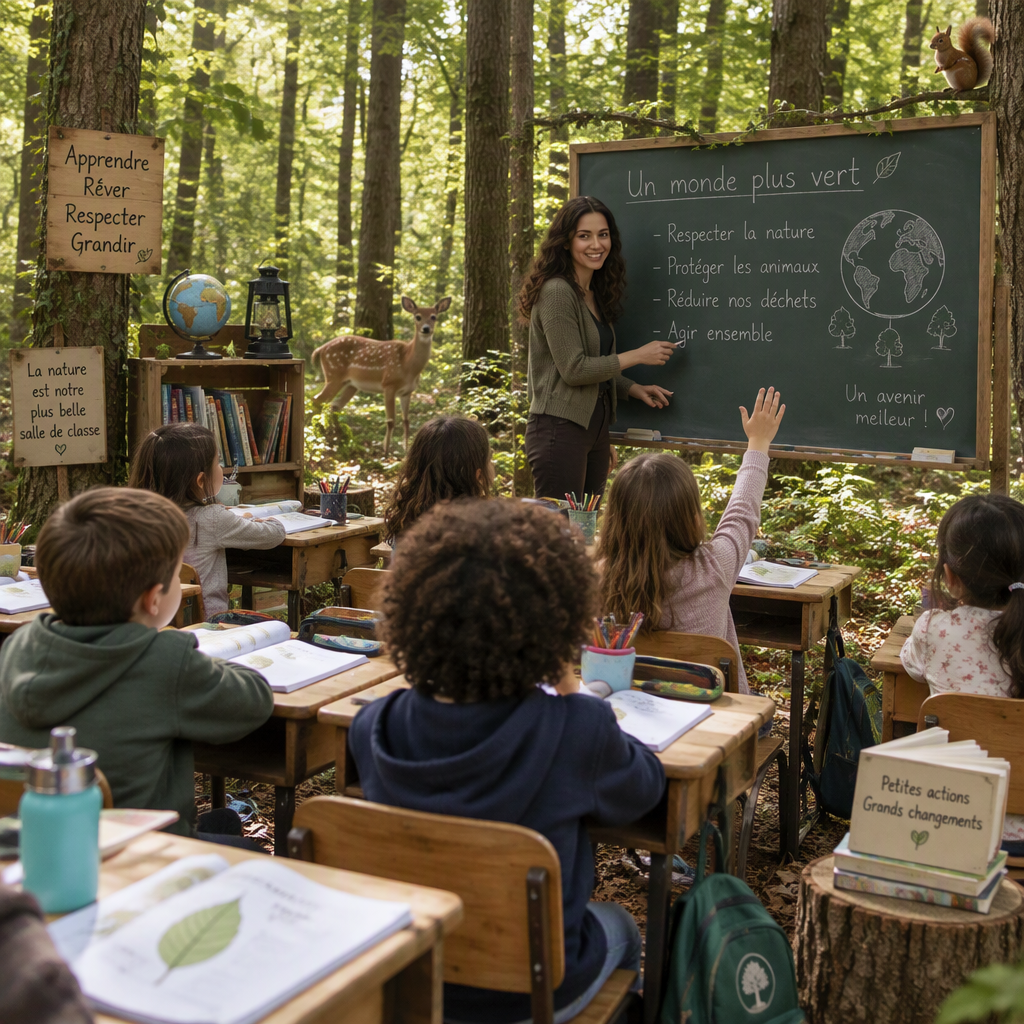
Environmental education can begin in early childhood and continue across people’s lives. Early childhood environmental education approaches link environmental knowledge with children’s cognitive, social, emotional, and physical development, and may encourage curiosity, environmental action, and civic engagement.
Programs range from one-time activities to curricular units and year-round learning; most studies in one review examined programs integrated into the school curriculum.
Teachers and school staff led most of the programs reviewed, while some involved external educators, parents, caregivers, or researchers.
Learning need not be limited to formal education. Everyday outdoor experiences and caregiver–child interactions may offer opportunities for environmental learning, though these settings have received relatively little research attention.
More broadly, environmental literacy courses can aim to help learners make informed decisions about environmental issues in daily life, although the available description of one such course does not specify its outcomes.
Applications in Resource Management
Education can support natural-resource management by giving communities, officials and resource users the knowledge and skills to take part in planning, apply management measures and assess their effects. Integrated natural resource management combines expertise from different disciplines, considers ecological and social processes across spatial and temporal scales, and involves stakeholders in decisions. Its effectiveness depends not only on information about resources, but also on understanding how people make decisions and interact with one another and their environment.
Community participation and local knowledge
Education and training can help local communities serve as active partners in resource management. In some approaches, communities implement management plans with support and oversight from technical services.
Participatory resource-management projects across several continents have likewise examined ways to involve local stakeholders in managing resources.
Incorporating traditional ecological knowledge can also inform marine conservation, while fisheries research highlights the importance of social and institutional context to management outcomes.
Participation does not automatically ensure that all groups have equal influence. Research on community forestry has examined how participatory arrangements can exclude some people, including along gender lines, underscoring the need for management processes to consider who has access to decisions and benefits.
Applying education to specific resources
In fisheries, education can help users understand and comply with management rules. A study in the Upper Gulf of California associated compliance with rights-based fisheries management with fishers’ perceptions of peer compliance and their experience.
Research on Icelandic fisheries has also considered ecosystem-based management and the impacts of changes to management approaches.
For water and agriculture, participatory management and cooperation among farmers have been proposed as ways to respond to water scarcity. Suggested measures include using drought-resistant crops, improving soil water retention, diversifying cultivation and investing in water-harvesting infrastructure.
These examples illustrate how sharing practical knowledge can connect resource-management decisions with local needs and conditions. Education also features in efforts to change household and workplace energy use. Environmental education programs have been studied as a means of influencing household energy practices,
while workplace research has evaluated group feedback and peer education as approaches to motivate energy conservation.
These interventions apply learning not only to technical choices but also to everyday behavior.
Governance, Equity, and Knowledge
Education can help people take part in decisions about natural resources by building the knowledge and skills needed to understand environmental issues, assess trade-offs, and engage with other stakeholders. Participatory planning aims to involve affected residents, organizations, and experts in developing and implementing decisions; community involvement can also bring local experience into land-use planning and help address conflict.
Effective resource governance depends not only on participation, but on whose knowledge is heard and how decisions are made. Knowledge governance (the formal and informal rules that shape how knowledge is created, shared, accessed, and used) can help explain why some perspectives carry more weight than others.
Research on environmental planning has found that local and Indigenous knowledge holders may remain poorly represented even where participation is formally encouraged. Excluding them can undermine the legitimacy and relevance of decisions.
Education that supports exchange between Indigenous, local, and scientific knowledge systems may help make resource management more inclusive. Rather than treating local knowledge merely as an addition to externally defined expertise, approaches to learning and planning can allow communities to help determine what knowledge is relevant and how it should be used.
Meaningful participation should extend across the decision-making process, from setting priorities and designing initiatives to sharing results.
Participation alone, however, does not resolve inequalities in influence. Government officials and other powerful actors may set agendas or shape which claims are considered authoritative, while community members have less ability to affect decisions.
Community-based management is more likely to endure when local responsibilities are supported by clear rules, ongoing engagement, and connections among communities and different levels of government.
Education can contribute to people’s capacity to engage in these processes, but equitable management also requires institutions that recognize local authority and address imbalances in whose knowledge and interests count.
Policy and Implementation
Education can support sustainable resource management when it is linked to policies, institutions, and opportunities for communities to take part in decisions. Training may help community members build technical knowledge and practical skills, while also improving communication with government agencies and other partners. Capacity-building efforts have been most effective when developed collaboratively by resource users, local governments, and support agencies.
Education and participation are needed at more than one level. Communities may benefit from training in planning, proposal writing, and financial management, while government agencies, NGOs, and donors may need support to work more effectively with local groups. Programs are more likely to be relevant when they address needs identified by participants and involve communities in their design.
In water management, involving affected people can bring local experience into decisions, improve the practicality of proposed measures, and help build shared understanding of resource challenges.
Governance and implementation
A policy framework alone does not ensure effective resource management. Policy development and revision can be insufficiently consultative, and limited monitoring and weak communication between levels of governance may slow responses to local needs or lead to implementation that departs from policy intentions.
Education and capacity-building can help address these gaps by strengthening both local participation and the ability of institutions to communicate, plan, and adapt. Zambia’s national development plans illustrate how governance objectives can be incorporated into policy. The 7th National Development Plan (2017–2021) called for stakeholder consultation and decentralization, and recognized the contribution of Indigenous and local knowledge to national development. The 8th National Development Plan (2022–2026) emphasized participation, transparency, accountability, inclusion, and responsiveness in sustainable natural-resource management and climate policy.
The effect of policy also depends on how it is implemented. Mandatory measures can produce changes without relying on individuals to choose to comply, whereas voluntary measures may have limited effects when they lack enforcement or incentives. For example, voluntary home energy audits were reported to have little effect on their own, but interest in energy-saving improvements increased when audits were free and retrofit costs were reimbursed.
This suggests that education and information may be more effective when paired with practical support and incentives.
Evidence and Documented Examples
A meta-analysis of global research on environmental education for children and adolescents found improvements in students’ environmental knowledge, attitudes, intentions, and behaviours. It also examined the conditions associated with stronger or weaker effects, although the available summary does not specify which approaches were most effective.
In a study at a public school in Brazil, 82 eighth- and ninth-grade students were divided into groups that did or did not participate in an environmental education programme. Students who participated showed improved environmental knowledge and more pro-environmental attitudes over the year, while the comparison group showed no such changes.
Education and information can also be used to encourage changes in resource use. Household energy interventions have tested strategies such as feedback, goal-setting, and social comparisons to reduce electricity consumption.
In one account of home energy reports, mailings were followed by short-term reductions in consumption, but households gradually returned towards their previous patterns before the next report arrived. Researchers suggested that the reports may have acted as reminders prompting behavioural changes such as adjusting thermostats or switching off lights.
This example indicates both the potential of information to influence resource use and the difficulty of sustaining changes over time. Resource management can also involve education and participation beyond formal schooling. Community forestry has been described as local people controlling, protecting, and managing forests through a community user group; it developed in part as an alternative to management by forest departments alone.
Work on knowledge exchange in resource management further cautions that community involvement requires time and social resources for relationship-building and co-development, as well as attention to trust in the evidence used.
These examples suggest that education can support more informed and participatory management, but that effective stewardship also depends on sustained engagement and institutions capable of putting knowledge into practice.
Challenges and Limitations
Education can increase knowledge about environmental issues, but gains in knowledge do not necessarily lead to changes in attitudes or behavior. A meta-analysis of climate change education found a larger mean effect for knowledge outcomes (g = 0.77) than for attitudes (g = 0.39) or behavior (g = 0.36); the knowledge estimate may also be inflated by publication bias.
The difference may partly reflect the use of more reliable measures of knowledge and the fact that many interventions focus on teaching facts rather than changing behavior. Knowledge about climate change may also be less useful for action than practical knowledge about what people can do to address it.
The evidence has further methodological limitations. Studies varied substantially, and many used measures that had not been validated, making their results difficult to compare. Behavioral outcomes were often self-reported, leaving them vulnerable to recall bias and social desirability effects. Few studies included students in primary education, limiting what can be concluded about the effects of education on younger learners.
Education also cannot, by itself, resolve the institutional and social barriers to managing natural resources. Community-based water and resource groups can face inadequate funding, limited legal recognition, inconsistent policy support, and insufficient capacity to participate in decision-making at higher levels.
Participation may also be undermined by unequal power, gender disparities, competing priorities among user groups, and historical injustices within and between communities.
These constraints can limit whose knowledge is heard and whose interests shape management decisions.
Even when local and practitioner knowledge is recognized, its holders may remain marginalized in collaborative processes, with little influence over decisions. Meaningful inclusion can be hindered by limited time, organizational support, and funding for engagement and knowledge exchange.
Reviews therefore identify a need not only to educate resource users, but also to address power imbalances, strengthen legal and institutional frameworks, and support genuine knowledge co-production.
Outcomes and Evaluation
Environmental education can strengthen the knowledge, attitudes, intentions and behaviours that support conservation and more sustainable resource use.
Its broader aim is to develop environmental literacy (including the values, dispositions and skills needed to act) and to encourage sustained engagement with human–nature relationships. These learning opportunities can take place throughout people’s lives, in both formal and non-formal settings.
Education may also help participants consider resource-management decisions across both short- and long-term time frames.
Information alone, however, is not always enough to change behaviour. Educational interventions are more likely to be useful when their messages reflect learners’ perspectives and show how a change in behaviour relates to everyday life. Role models and social norms can also help encourage pro-environmental action.
In community-based management, education and participation need to account for who is included in decisions: marginalised groups may be excluded, and gender norms can limit women’s involvement. Benefits and incentives also need to be designed carefully, since weak governance or poorly distributed benefits can undermine cooperation or encourage overuse of resources
Evaluation can assess whether an intervention changes knowledge or attitudes, but should also examine actual behaviour and environmental outcomes. For example, studies of behavioural interventions may compare behaviour before and after an intervention, or against a control group, and distinguish increases, decreases or no measurable change.
Depending on the intervention, evaluation can also consider outcomes such as reduced greenhouse-gas emissions, economic benefits and wider societal gains, while accounting for the scale of the emitting sector and whether changes persist over time.
Broader assessments can combine impact evaluation with cost–benefit analysis, ecosystem-service valuation and scenario analysis. These approaches can help estimate the costs and benefits of policies, account for the value of natural systems, and explore trade-offs between possible future choices.
In community resource management, evaluation should also consider whether conservation benefits outweigh local costs and whether communities have the support and authority needed to manage resources sustainably.
Evaluations can inform management learning and accountability, although findings from small numbers of studies (for example, moderator analyses of attitudes or behaviour) should be interpreted cautiously.