By Philippe Reclus
summary
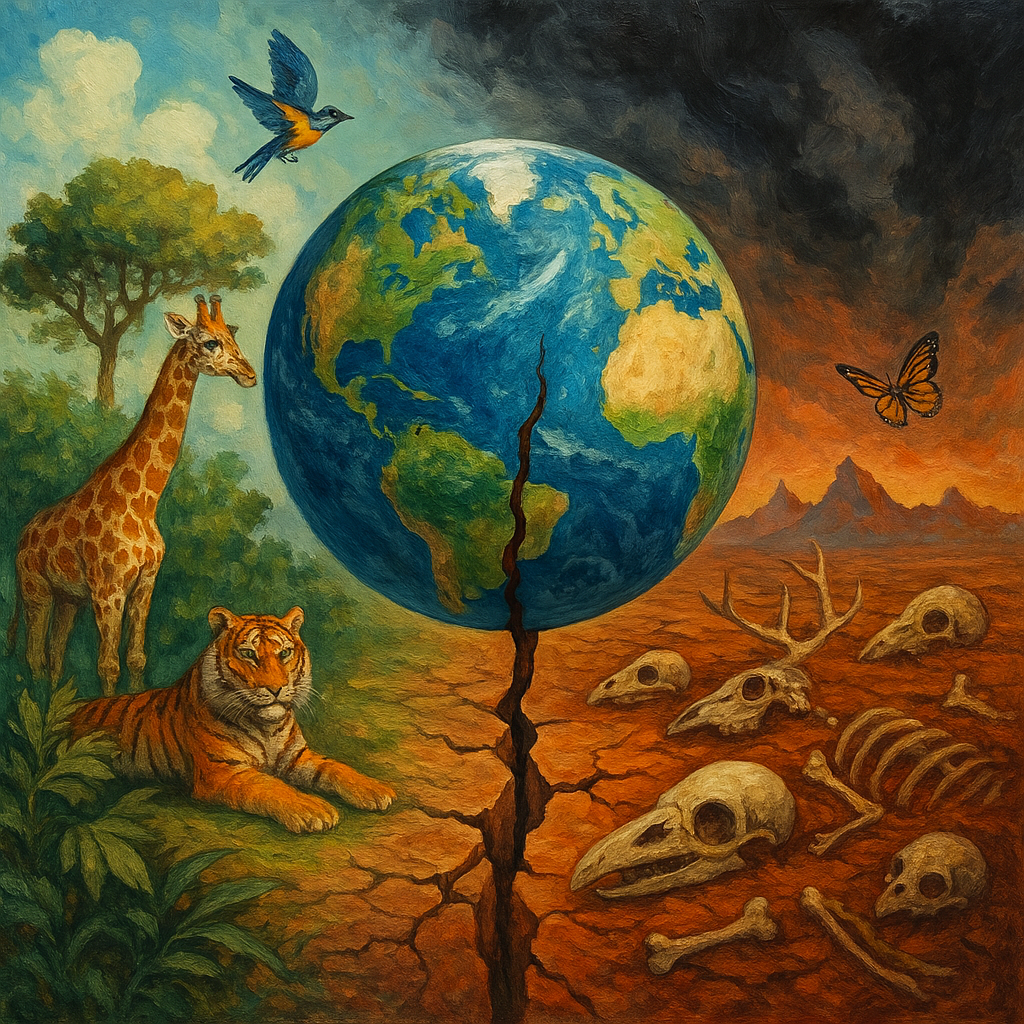
Biodiversity loss refers to the decline in the variety and abundance of life on Earth, a phenomenon that threatens the delicate balance of ecosystems essential for sustaining life. This crisis is predominantly driven by human activities such as habitat destruction, pollution, climate change, overexploitation of species, and the introduction of invasive species, each contributing significantly to ecological degradation. Biodiversity is not only crucial for maintaining healthy ecosystems but also underpins vital services such as food production, clean water, and disease regulation, making its loss a pressing global concern.
The implications of biodiversity loss extend beyond environmental degradation, posing serious risks to human health, economic stability, and social structures. For instance, the decline in pollinator populations, which play a pivotal role in global food security, highlights the direct consequences of biodiversity loss on agriculture and, consequently, human nutrition and livelihoods.
Economically, the global costs associated with biodiversity loss are staggering, estimated to reach around $10 trillion annually due to increased healthcare expenses and agricultural losses. Vulnerable communities, particularly in developing regions, face the greatest challenges as their dependence on natural resources for survival intensifies amid declining biodiversity.
Controversies surrounding biodiversity loss often focus on the tension between economic development and conservation efforts. While there is a growing recognition of the need for sustainable practices, conflicts arise over land use, resource exploitation, and the prioritization of immediate economic benefits over long-term ecological health. Activists argue that urgent action is required to halt biodiversity decline and restore ecosystems, advocating for policies that integrate environmental sustainability with socio-economic development.
Addressing the biodiversity crisis necessitates comprehensive conservation strategies that encompass ecological and socio-economic dimensions. Integrated efforts at local, national, and global levels are essential for promoting biodiversity protection, ensuring that ecosystems can continue to thrive and support human life in a changing world.
Causes of Biodiversity Loss
Biodiversity loss is primarily driven by human activities that alter the natural environment. Several interrelated factors contribute significantly to this phenomenon, including habitat destruction, pollution, invasive species, overexploitation, and climate change.
Pollution
Pollution is another significant factor contributing to biodiversity loss. Various pollutants, including plastic waste, heavy metals, and chemicals, can harm ecosystems and the organisms that inhabit them. Air pollutants such as carbon dioxide and ammonia can directly affect biodiversity by altering habitats and the species that can survive within them.
The long-term effects of pollution on biodiversity are complex and still being studied, but the immediate impacts are evident in declining populations and compromised ecosystems.
Overexploitation
Overexploitation of species for food, medicine, and other resources leads to significant declines in biodiversity. Activities like extreme fishing and poaching have placed many species at risk, with one-third of Earth’s vertebrates facing extinction due to overexploitation.
This practice not only threatens the targeted species but also destabilizes entire ecosystems by disrupting food webs and ecological balances.
Habitat Destruction
One of the most critical causes of biodiversity loss is habitat destruction, which accounts for approximately 30% of the decline in biodiversity globally.
Activities such as deforestation, urban development, and large-scale agriculture lead to the degradation and fragmentation of habitats. This fragmentation isolates species and disrupts ecosystems, making it difficult for plants and animals to thrive.
The most endangered habitats are often found in biodiversity hotspots such as the Amazon rainforest, Southeast Asia, and African savannahs.
Invasive Species
The introduction of invasive species poses a severe threat to native biodiversity. These non-native species can outcompete, prey on, or bring diseases to native species, leading to significant ecological disruptions.
While not all introduced species become invasive, those that do can have disproportionate effects on their new environments, altering habitats and threatening local flora and fauna.
Climate Change
Climate change exacerbates existing threats to biodiversity. Changes in temperature and precipitation patterns can shift species distributions and disrupt ecological interactions.
Rapid climate change reduces the ability of species to adapt, thereby increasing extinction risks. The resulting loss of biodiversity also jeopardizes human interests in ecosystem services, such as clean water and air, food production, and disease regulation.
Consequences of Biodiversity Loss
Biodiversity loss has profound consequences that extend beyond the immediate environmental impacts, significantly affecting human health, social structures, and economic development. As ecosystems deteriorate, the essential services they provide, such as food security, water purification, and disease regulation, are threatened, leading to cascading effects on human societies and the environment.
Impact on Ecosystem Services
The decline in biodiversity directly threatens vital ecosystem services, which include pollination, soil fertility, and clean water supply. For instance, the decrease in bee populations, which are responsible for pollinating crops worth over $235 billion annually, poses a serious risk to global food security. The loss of diverse species diminishes the resilience of ecosystems, making them less able to recover from disturbances such as climate change or disease outbreaks. This instability can lead to increased soil erosion and reduced agricultural productivity, further exacerbating food insecurity.
Economic Implications
Economically, biodiversity loss is estimated to cost the global economy around $10 trillion annually due to healthcare costs from increased disease transmission and agricultural losses linked to declining pollinator populations. Rural communities, particularly in developing countries, are disproportionately affected as they rely heavily on natural resources for their livelihoods. As ecosystems degrade, access to clean water, fertile land, and wild foods becomes restricted, worsening poverty and inequality. This economic strain can also trigger social disruptions, including migration and conflict over dwindling resources, which can lead to further environmental degradation.
Social and Health Consequences
The social implications of biodiversity loss are significant, particularly for vulnerable populations. As natural resources become scarce, marginalized communities may be forced to migrate or adopt unsustainable practices, leading to increased poverty and social unrest. Additionally, biodiversity loss impacts human health; degraded ecosystems often fail to provide adequate social needs, leading to a rise in mental and physical health issues. Increased interactions between humans and wildlife due to habitat loss can elevate the risk of infectious diseases, further complicating public health challenges.
Urgency for Conservation
The multifaceted impacts of biodiversity loss underscore the urgent need for integrated conservation strategies that consider both ecological and socio-economic dimensions. Addressing the crisis of biodiversity loss is crucial for promoting a sustainable and equitable future, ensuring that both ecosystems and human societies can thrive.
Case Studies
This section presents an overview of eight case studies that illustrate the communicative processes involved in addressing biodiversity loss and climate change across different global contexts. The case studies originate from diverse geographical regions: Brazil and Colombia in South America, India and Bangladesh in South Asia, Tanzania and Egypt in Africa, and Germany and the British Isles of Scilly in Europe https://pmc.ncbi.nlm.nih.gov/articles/PMC10571513/ . Each case study provides unique insights into stakeholder communication, community involvement, and the challenges faced in promoting environmental conservation.
Overview of Case Studies
The eight case studies detailed in Table 2 cover various approaches to stakeholder communication and community engagement in the context of environmental challenges. They emphasize the critical importance of including local actors in the management of natural resources to foster effective conservation, mitigation, and adaptation strategies. While the Appendix contains comprehensive narrative accounts, the summaries in Table 3 highlight the communication dynamics within each case study, and Table 4 outlines the central successes, challenges, lessons learned, and unexpected outcomes.
Importance of Community Involvement
Community-level responses are vital in combating global challenges like climate change and biodiversity loss. However, the neglect of community engagement throughout project phases often leads to significant gaps in understanding and trust, hindering the success of environmental initiatives. Historical context reveals that despite the recognition of indigenous and local knowledge at the United Nations Conference on Environment and Development in 2002, effective bridging of communicative gaps remains inadequately addressed in both development and research frameworks.
Evaluating Communication Strategies
The case studies collectively highlight that effective communication strategies are paramount for achieving stakeholder engagement and collaboration. Research has shown that projects exhibiting advanced communication approaches tend to yield greater success and facilitate postcolonial moments, transformative interactions that disrupt traditional power dynamics and promote the coexistence of diverse knowledge systems. Conversely, projects that fail to adequately engage local communities often encounter backlash and diminished interest, as stakeholders prioritize immediate solutions over long-term engagement.
Key Findings and Recommendations
The analysis of these case studies not only identifies best practices in stakeholder communication but also underscores the necessity for a paradigm shift in how researchers and policymakers approach community engagement in the Global South. By integrating local knowledge and investing time in understanding community contexts, project leaders can foster a more inclusive and productive dialogue, ultimately leading to more sustainable outcomes in biodiversity conservation and climate resilience.
Conservation Efforts
Conservation efforts are critical in addressing the ongoing loss of biodiversity, which poses a significant threat to the ecological balance of life on Earth. These efforts can take various forms, focusing on protecting habitats, supporting local communities, and utilizing innovative strategies for sustainability.
Community-Led Conservation
Community-led conservation has emerged as an effective model that emphasizes the importance of local knowledge and stewardship in biodiversity protection. This approach trusts that local communities can manage their natural resources effectively when provided with the necessary resources and tools. Research indicates that community-led initiatives can be just as effective, if not more so, than traditional conservation strategies that exclude local populations from their environments. Upholding the rights and customary land tenure of Indigenous peoples and local communities is essential for achieving successful biodiversity conservation outcomes.
Funding and Financial Instruments
Securing diverse funding streams is vital for the sustainability of grassroots conservation initiatives. These projects can tap into various financial instruments, including microgrants from conservation associations and larger funding pools managed by governmental or international bodies. Innovative financing methods, such as green bonds and wildlife conservation bonds, have also been developed to attract private investment for ecosystem restoration and habitat preservation. These financial strategies not only support conservation efforts but also enhance community livelihoods, reinforcing the connection between biodiversity and community development.
Integrating Biodiversity with Sustainable Development
Linking biodiversity conservation with sustainable community development is a complex but necessary task. Challenges such as funding gaps and policy conflicts often hinder effective conservation strategies. For instance, national conservation priorities may conflict with local land use rights, creating tensions among communities. Addressing these challenges requires a holistic approach that considers the social and economic contexts of local populations while fostering a cooperative environment for biodiversity protection.
Innovations in Citizen Science
Citizen science has gained traction as a tool for biodiversity monitoring and conservation awareness. The Diffusion of Innovations model suggests that the adoption of innovative practices, such as digital platforms for biodiversity monitoring, is influenced by factors like simplicity and relative advantage. Projects like eBird demonstrate the effectiveness of engaging citizens in data collection, which not only contributes to scientific research but also enhances community involvement in conservation efforts. Moreover, strategies that enhance participant retention, such as gamification and regular feedback, are essential for maintaining long-term engagement in these initiatives.
Global Initiatives
Convention on Biological Diversity
The Convention on Biological Diversity (CBD), a component of the United Nations Environment Programme (UNEP), provides a comprehensive definition of biological diversity. It encompasses the variability among living organisms across various ecosystems, including terrestrial, marine, and freshwater environments. The CBD underscores the importance of biodiversity in maintaining ecological balance and the myriad services it provides, including climate stability, food security, and economic growth.
Sustainable Development Goals (SDGs)
The global governance framework surrounding biodiversity conservation has been significantly shaped by the adoption of the United Nations Sustainable Development Agenda in 2015, which established seventeen Sustainable Development Goals (SDGs). These goals are seen as a critical juncture in global policy, addressing multifaceted challenges such as wealth inequalities, political conflicts, climate change, and public health crises like the COVID-19 pandemic. The SDGs aim to foster an inclusive and sustainable development paradigm that integrates environmental, social, and economic dimensions, thereby influencing how biodiversity is protected and preserved worldwide.
Aichi Targets and Post-2020 Framework
In line with the CBD, the Aichi Targets were established as specific goals to enhance global biodiversity by 2020. They serve as benchmarks against which nations can develop national action plans tailored to their local biodiversity needs and social contexts. Following the Aichi Targets, the Post-2020 Global Biodiversity Framework aims to extend efforts towards 2030 and 2050, instituting new mechanisms for transparency, enforcement, and accountability to bolster biodiversity protection on a global scale.
Regional Cooperation and Initiatives
The Middle East and North Africa (MENA) region faces unique challenges in biodiversity conservation, necessitating a collaborative regional strategy. Regional organizations such as the League of Arab States (LAS) and the Gulf Cooperation Council (GCC) play crucial roles in environmental governance by fostering partnerships that promote sustainable practices and enhance data accessibility regarding environmental issues. However, there remains a notable gap in the active collaboration of these bodies specifically on Access and Benefit-Sharing (ABS) mechanisms outlined in the Nagoya Protocol.
Capacity Building and Education
Implementing cooperative research and capacity-building initiatives is essential for enabling countries to effectively address biodiversity loss. Policy commitments should support educational strategies that raise awareness about landscape transformation and biodiversity preservation. By integrating environmental education into formal curricula and incentivizing collaborative partnerships, nations can foster a culture of ecological consciousness among their citizens.
Educational Initiatives
Importance of Environmental Education
Educational initiatives play a crucial role in promoting awareness and understanding of biodiversity loss and its implications for the planet’s ecological balance. The development of national strategies and action plans focusing on environmental education is essential for raising awareness about landscape transformation and biodiversity preservation. These strategies can facilitate the adoption of innovative educational techniques that resonate with contemporary culture, encouraging active engagement from diverse audiences.
Policy Mechanisms
The integration of dynamic policy mechanisms is vital to stimulate educational outreach. Governments can incentivize collaborative partnerships among governmental agencies, non-governmental organizations, and private entities to expand the reach and impact of educational programs. Moreover, incorporating environmental modules into formal educational curricula through legislative measures ensures a systemic and long-term approach to cultivating ecological consciousness among learners.
Framework for Ecosystem Restoration Education
In alignment with global initiatives, such as the UN-led Greening Education Partnership, efforts are underway to develop a framework for embedding ecosystem restoration into both formal and non-formal educational settings. This initiative, known as the Education Challenge, was launched on May 22, 2023, coinciding with the International Day for Biological Diversity. It aims to map existing initiatives and establish a common agreement on quality lifelong learning outcomes for #GenerationRestoration, fostering collaboration to enhance the effectiveness of educational efforts.
Innovative Educational Programs
There are numerous educational programs that transcend traditional disciplinary boundaries and emphasize Nature-based Solutions (NbS). Notable collaborations, such as Robin Lasser’s Art About project at Big Basin Redwoods State Park, exemplify innovative approaches to integrating knowledge, creativity, and practical experience in environmental education. Such programs not only enhance understanding of biodiversity but also inspire actionable steps towards its preservation. Through these multifaceted educational initiatives, the importance of biodiversity and the necessity of its protection can be effectively communicated, fostering a more informed and proactive global community.