By Philippe Reclus
summary
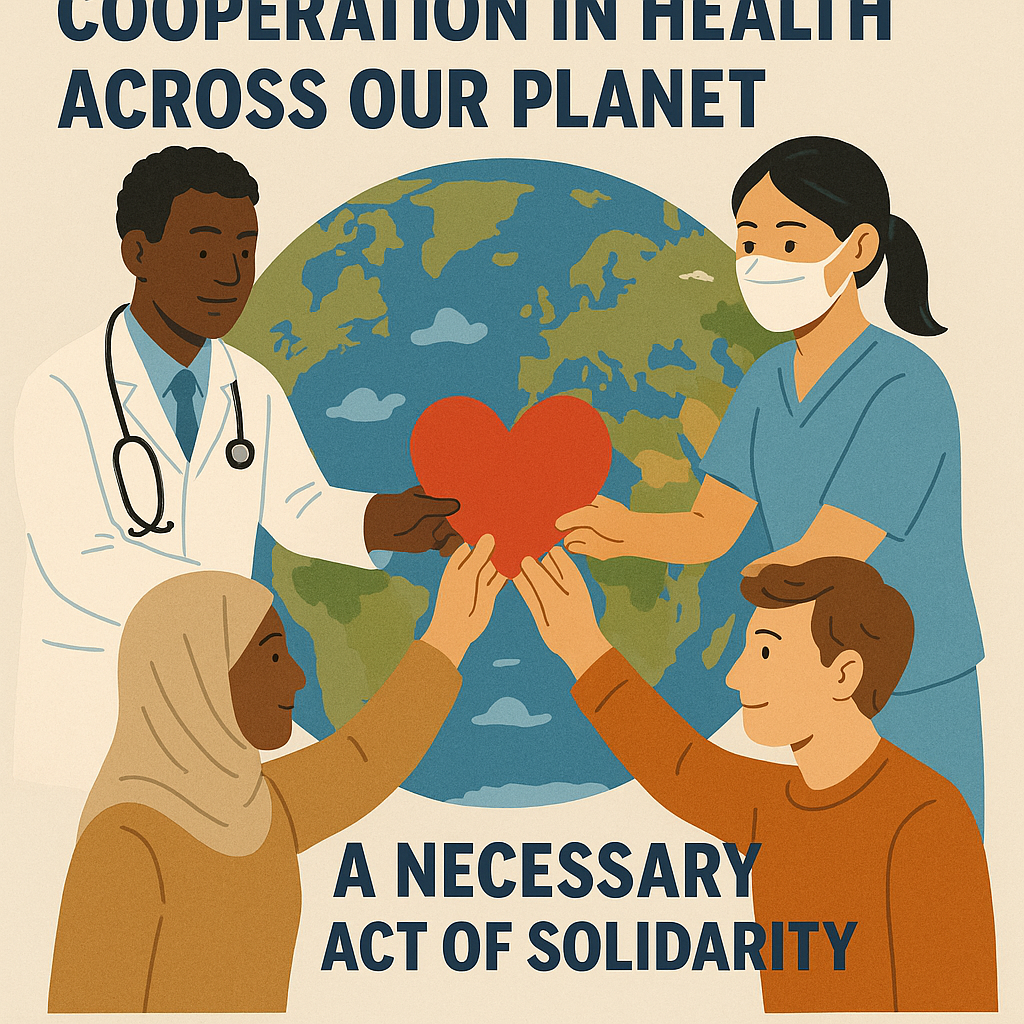
Cooperation in health across the globe is increasingly recognized as a necessary act of solidarity, driven by the interconnected nature of health challenges that transcend national borders. The emergence of global health issues such as infectious disease outbreaks, the rise of non-communicable diseases, and the impacts of climate change underscore the urgent need for collective action among nations. Notably, historical events such as the influenza pandemic of 1918 and the HIV/AIDS crisis have illustrated that national health systems are often inadequate for managing transnational health threats, prompting the establishment of frameworks like the World Health Organization (WHO) to foster international collaboration and promote health equity across all regions of the world.
The necessity for cooperation is further underscored by the ongoing challenges posed by pandemics, as highlighted by the COVID-19 crisis, which revealed the vulnerability of healthcare systems worldwide and the critical role of joint efforts in effectively managing public health emergencies.
Moreover, the growing burden of non-communicable diseases, exacerbated by social and economic disparities, emphasizes the importance of equitable health interventions that can be achieved only through global partnerships.
Engaging in health diplomacy and strengthening collaborative networks not only enhances health outcomes but also fosters trust and solidarity among nations, laying the groundwork for a more resilient global health architecture.
Despite the clear benefits of global health cooperation, significant barriers remain, including structural inequalities, financial constraints, and cultural differences that complicate collaborative efforts. Addressing these challenges requires a commitment to equitable resource distribution, mutual respect, and the inclusion of diverse voices in decision-making processes.
By prioritizing solidarity and cooperative frameworks, the international community can advance towards a healthier future, where all individuals have access to quality healthcare, regardless of geographical or economic status.
In summary, fostering cooperation in health is not merely an ethical imperative but a vital strategy for ensuring global health security, promoting equity, and addressing the complex interplay of factors that contribute to health disparities. As the world continues to face emerging health threats, the need for solidarity in global health efforts has never been more critical.
Historical Context
The evolution of global health cooperation has been shaped by a variety of historical events that underscore the necessity of solidarity in addressing health challenges. Throughout the 20th century, major health crises, such as the influenza pandemic of 1918 and the emergence of HIV/AIDS in the 1980s, highlighted the limitations of national health systems in managing diseases that cross borders. These events prompted a shift towards a more collaborative approach to health, recognizing that infectious diseases do not adhere to geopolitical boundaries and that international cooperation is vital for effective public health responses. In the wake of these health crises, international organizations like the World Health Organization (WHO) were established to facilitate global cooperation in health. The WHO’s founding principles emphasized the need for collective action to improve health outcomes worldwide, particularly in low- and middle-income countries (LMIC), which often face the greatest challenges in health service delivery. This framework has evolved to include a wider array of stakeholders, such as governmental and funding partners from high-income countries (HIC), which have increasingly engaged in leadership roles alongside health workers from LMIC. The late 20th and early 21st centuries witnessed a further expansion of global health partnerships, fueled by the recognition of social determinants of health and the role of globalization in health outcomes. Notably, the WHO Commission on the Social Determinants of Health emphasized the importance of addressing inequalities and fostering collaborations across sectors to promote health equity. These principles were put to the test during the COVID-19 pandemic, which underscored the interdependence of nations in combating global health threats and the urgent need for a unified response. The integration of innovative research and collaborative strategies has also played a critical role in the historical development of global health cooperation. The COVID-19 pandemic prompted unprecedented levels of data sharing and collaboration among researchers worldwide, demonstrating that complex health problems require diverse expertise and unified action. This trend aligns with historical precedents where collective efforts have led to significant advancements in public health, from vaccine development to health policy formulation, reinforcing the idea that global health is a shared responsibility that demands solidarity across nations and communities.
Current Global Health Challenges
The landscape of global health is marked by a series of interconnected challenges that require a unified international response. Notably, the 21st century has seen the emergence and resurgence of infectious diseases, such as SARS, Ebola, Zika, and most recently COVID-19. These outbreaks highlight the porous nature of national borders and the vulnerabilities of healthcare systems worldwide, emphasizing that health issues are not confined by geographical boundaries.
Infectious Diseases and Global Health Security
Infectious diseases pose significant threats to global health security, necessitating robust systems for prevention, detection, and response. The increasing prevalence of antimicrobial resistance (AMR) exacerbates this threat, potentially rendering essential treatments ineffective and demanding a coordinated global effort to promote responsible antibiotic use and develop new therapies. The World Health Organization (WHO) has been actively involved in efforts to mitigate these risks, introducing initiatives such as the Immunization Agenda 2030, which aims to ensure equitable access to vaccines and immunization services worldwide.
Non-Communicable Diseases and Health Disparities
Alongside infectious diseases, the global burden of non-communicable diseases (NCDs), including cardiovascular disease, cancer, and diabetes, continues to rise, particularly in low- and middle-income countries (LMICs). These conditions necessitate long-term management and place a significant strain on health systems globally. Disparities in health outcomes, particularly among different racial and ethnic groups, further complicate this issue. For example, evidence suggests that Black populations, regardless of their country of residence, experience higher risks of conditions such as hypertension and diabetes, leading to significant health inequities.
The Impact of Climate Change
Climate change acts as a threat multiplier, worsening existing health challenges and generating new ones. The changing environment affects disease transmission patterns, food security, and access to clean water and sanitation, disproportionately impacting vulnerable populations. These evolving health challenges necessitate a multi-sectoral approach, recognizing the complex interplay of environmental, social, and economic factors that contribute to health disparities.
The Necessity for International Cooperation
The interrelated nature of these global health challenges underscores the importance of international cooperation. Collaborative efforts are crucial for managing pandemics, promoting health equity, and addressing the social determinants of health that perpetuate inequalities. The need for effective and equitable health interventions is paramount, as health disparities not only affect individual well-being but also threaten global stability and security. Achieving sustainable development and improving health outcomes worldwide hinges on a concerted global agenda that prioritizes health equity and solidarity among nations.
Benefits of Cooperation in Health
Cooperation in health offers a multitude of benefits that contribute to improved health outcomes globally. These advantages can be categorized into several key areas.
Enhanced Research and Development Capabilities
Collaborative partnerships, particularly with developing countries, enable access to diverse populations and varying disease burdens, which enrich research opportunities.
This collaborative approach accelerates the development of new diagnostics, treatments, and vaccines by conducting clinical trials and epidemiological studies in varied settings, leading to more robust and generalizable data for effective interventions across populations.
Such cooperation also fosters scientific capacity building within developing countries, thereby strengthening the global health research infrastructure.
Improved Global Health Security
Stronger cooperation enhances global health security by mitigating the risks of cross-border health threats. Transparency and accountability are fundamental components of this framework, ensuring effective resource utilization and program success.
By investing in health systems in developing countries, the international community helps create stronger health systems that can detect, contain, and respond to outbreaks at their source, thus preventing them from escalating into global pandemics.
Collaborative surveillance systems and joint training exercises further enhance preparedness and response capabilities worldwide.
Capacity Building and Sustainable Health Systems
True partnerships emphasize capacity building within developing countries, prioritizing self-reliance and long-term sustainability.
This involves investments in health workforce development, infrastructure enhancements, and improved data capabilities, which contribute to resilient and responsive health systems. Moving away from short-term project deliverables to focus on long-term capacity building can lead to more effective health interventions that are culturally appropriate and aligned with national development goals.
Improved Access to Health Technologies
Cooperation facilitates access to essential health technologies, medicines, vaccines, and diagnostics. This is particularly important in addressing non-communicable diseases (NCDs) that require long-term management and often strain health systems.
The collaboration allows for a multi-sectoral approach that encompasses prevention, early detection, and affordable access to quality care, crucial for vulnerable populations impacted by rising health challenges exacerbated by factors like climate change.
Strengthened Diplomatic Ties and Global Influence
Engaging in genuine health partnerships fosters trust and mutual understanding between nations. Health diplomacy, underpinned by shared health goals, can bridge political divides and enhance international relations.
By demonstrating commitment to global health solidarity, developed countries can strengthen their global standing and influence, promoting a more cooperative international environment in health matters.
Increased Ownership and Agency for Developing Countries
Cooperation empowers developing nations to take the lead in shaping their health interventions. By involving local communities and governments in program design and implementation, initiatives are more likely to be culturally relevant and sustainable.
This approach not only fosters accountability but also strengthens local commitment to the success of health programs.
Case Studies
Engagement of Marginalized Populations
Several case studies have explored effective strategies for engaging marginalized populations in the design and delivery of health services. For example, initiatives in Ontario have illustrated how involving community members from underrepresented groups can enhance program effectiveness and equity. These efforts aim to ensure that health services are culturally sensitive and meet the specific needs of diverse communities, thereby reducing health disparities.
HIV/AIDS Treatment Expansion
A landmark study highlighted the significant global advancements in the treatment of HIV/AIDS over the past few decades. It emphasized the successes achieved through collaborative efforts, which have led to expanded access to treatment. However, the same study noted that the COVID-19 pandemic exacerbated existing inequities, disproportionately affecting countries with limited resources. These findings suggest a pressing need for governments to prioritize equitable pandemic preparedness and maintain the momentum gained in improving health outcomes for vulnerable populations.
COVID-19 Research Collaboration
The COVID-19 pandemic prompted an unprecedented global research initiative, marked by extensive collaboration among healthcare researchers from various disciplines. This multi-faceted approach aimed to mitigate the pandemic’s impact by sharing data, expertise, and resources. Teams were organized to manage COVID-19 research efforts efficiently, leading to the production of a substantial volume of scientific literature. This collaborative framework not only enhanced the quality of research but also facilitated the rapid development of responses to emerging health threats, showcasing the effectiveness of cross-disciplinary cooperation.
Global Health Partnerships
Numerous global health partnerships have been established to address pressing health issues by leveraging the strengths of diverse stakeholders, including public and private sectors, non-governmental organizations, and academic institutions. These alliances have demonstrated their value in raising awareness of unmet health needs, supporting coordination efforts, and providing financial assistance to countries. A clear framework established by the World Health Organization (WHO) guides the engagement in these partnerships, emphasizing the necessity of added public health value in collaborative initiatives.
Lessons from Historical Health Initiatives
Historically, programs such as the Global Fund and the Polio Global Eradication Initiative have illustrated the power of global cooperation in addressing health crises. These initiatives have not only mobilized resources but also fostered a spirit of solidarity among nations, underscoring the importance of collective action in combating diseases that transcend borders. As we continue to face complex global health challenges, the lessons learned from these successful collaborations are invaluable for shaping future responses.
Barriers to Cooperation
Cooperation in global health is fraught with several barriers that hinder effective collaboration among nations and communities. These barriers stem from structural inequalities, differing priorities, and historical power dynamics that complicate the pursuit of equitable health solutions.
Structural Inequalities
One significant barrier to cooperation is the traditional North-South paradigm, which often perpetuates power imbalances between developed and developing countries. This unidirectional flow of resources can undermine local ownership and agency, leading to a dependency on external aid that stifles the development of sustainable health solutions. The inherent limitations of this framework highlight the need for genuine partnerships that foster mutual respect and shared responsibility among communities, regardless of their economic status.
Financial and Resource Constraints
Financial limitations are another critical obstacle to effective health cooperation. Many developing nations struggle with inadequate funding and infrastructural capabilities to address public health issues independently. Consequently, reliance on external funding can create a cycle of dependency, where recipient countries become less equipped to manage their health systems autonomously. Moreover, funding mechanisms can sometimes restrict the participation of vulnerable partners, exacerbating existing inequalities. This dynamic can create tension among partners, especially when contributions are perceived as unequal, complicating collaborative efforts further.
Engagement and Decision-Making Challenges
Effective partnerships often face challenges related to engagement and decision-making processes. While many collaborative efforts exist, the lack of meaningful involvement from all stakeholders can result in contractual relationships rather than true partnerships. This can limit the ability of all parties to contribute equitably to the program or activity, thereby undermining the potential for joint ownership and shared success. For cooperation to be effective, it must be inclusive and involve all relevant stakeholders, including local communities, healthcare providers, and scientific institutions.
Political and Cultural Barriers
Political and cultural challenges also pose significant barriers to global health cooperation. Shifting power dynamics and challenging entrenched interests can be difficult, as these efforts often require collective mobilization and transformative leadership. The complexity of diverse national, religious, and ethnic identities necessitates a nuanced approach to building trust and solidarity among different groups. Furthermore, to create a system of global health that truly serves all, it is imperative to address the historical contexts of exploitation and oppression that continue to affect marginalized communities.
Recognition of Intersecting Factors
Understanding and addressing the intersecting factors contributing to health inequities is essential for developing effective interventions. The intersectionality of social conditions like poverty and marginalization with racial issues exacerbates health disparities, complicating efforts to achieve equitable health outcomes. A comprehensive strategy must recognize these complexities and involve a holistic approach to health that transcends simple metrics of success.
Strategies for Enhancing Cooperation
Framework for Global Health Cooperation
Adopting a new framework for global health cooperation is essential for addressing health disparities and enhancing resilience. This framework should be founded on principles of mutual respect, transparency, and accountability, with an emphasis on sustainable capacity building and equitable access to health resources. By valuing the expertise and agency of developing countries, we can foster a more inclusive and democratic global health architecture, ensuring that diverse contributions are acknowledged and integrated into decision-making processes.
Models of International Collaboration
Different models of international collaboration play a crucial role in shaping health partnerships. South–South cooperation involves collaborations primarily between developing countries, focusing on knowledge sharing and resource pooling without significant input from developed nations. North–South cooperation represents the traditional development assistance model, while triangular cooperation incorporates partnerships between two developing nations facilitated by a developed country. Multi-partner cooperation extends to a variety of stakeholders, including governments, NGOs, and private sectors, allowing for more comprehensive and flexible approaches to health challenges.
Equitable Access to Health Resources
Equitable access to essential health resources such as medicines, vaccines, and diagnostics is paramount. Strategies to promote this access include innovative financing mechanisms, technology transfer, and joint manufacturing agreements. Strengthening multilateral institutions, particularly the World Health Organization (WHO), is vital for effective global health governance. Reforming these institutions to ensure greater representation and participation from developing countries will create a more balanced and democratic health architecture, essential for addressing global health needs effectively.
Strengthening Cross-Border Cooperation
Intercountry cooperation is a key enabler of resilience, enhancing responses to health crises through shared resources and expertise. This includes addressing gaps in services, especially in border regions, and ensuring that healthcare access is equitable. Factors that facilitate cross-border cooperation include comprehensive knowledge of local contexts, active stakeholder involvement, and citizen participation in cooperative projects aimed at addressing healthcare bottlenecks.
Capacity Building and Knowledge Sharing
Building local capacities through training healthcare workers in developing countries is vital for strengthening public health systems. This exchange of knowledge not only enhances local ownership but also improves the long-term effectiveness of health initiatives. Academic and practical collaborations focused on global health issues can provide the necessary insights and methodologies to develop policies that address root causes of health disparities.
Commitment to Global Solidarity
Finally, fostering a commitment to global solidarity is essential to overcome inequities in health systems worldwide. This involves active participation from all stakeholders, including governmental and funding partners, to create a more equitable health landscape. Advocacy for a solidarity-based framework can guide future policy reforms and set research priorities that prioritize collective health outcomes over individual interests.